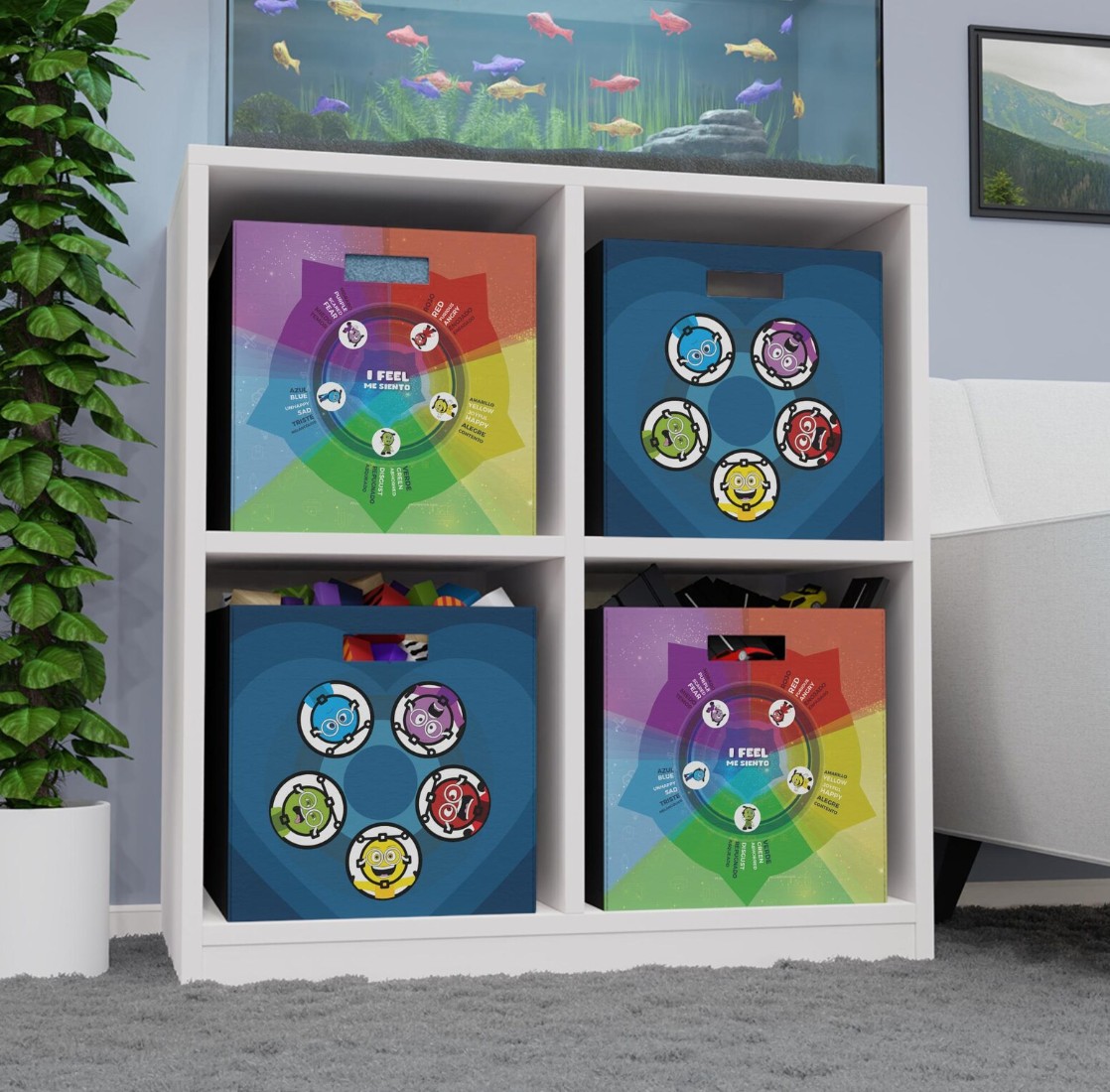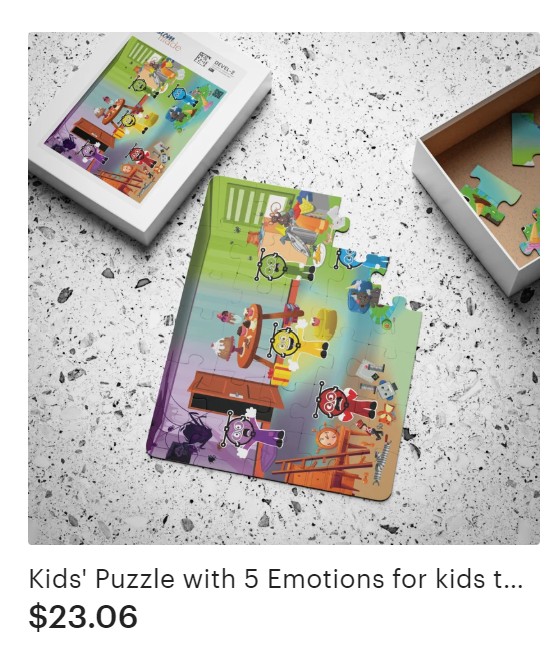


SEL through
RE-CONNECT
Calm Down Corner
Nurturing Emotional Learning
Through Calm down, then Re-Connect
Fomentando el aprendizaje socioe-mocional a través de la reconnection buscando calma re-encontrarse y re-incorporarse
Occupational Therapists, School Counselors, SEL Specialists, Teachers, Behavioral Support Teams, and Home Educators
Age Range: Preschool to 3rd Grade
Languages: English / Spanish
💙 About This Experience
CALM & RECONNECT™ invites children to recognize, regulate, and communicate their emotions through a structured sensory-based learning environment.
By combining visual emotion seating, sensory supports, and reflection tools, children learn to identify how they feel, develop self-regulation strategies, and build confidence in expressing their emotional needs.
This experience helps transform the traditional calm-down corner into an intentional social-emotional learning space that promotes emotional growth, independence, and successful classroom participation.
🌈 The Learning Experience
Through guided emotional check-ins and sensory exploration, children are encouraged to:
- Identify and name their emotions
- Develop self-awareness and self-regulation skills
- Practice emotional expression in a safe environment
- Build confidence in communicating their needs
- Strengthen emotional vocabulary in English and Spanish
- Learn when they are ready to reconnect with learning and peers
These experiences empower children to understand their feelings while developing the skills needed to navigate emotions independently.
🧸 The Experience in Action
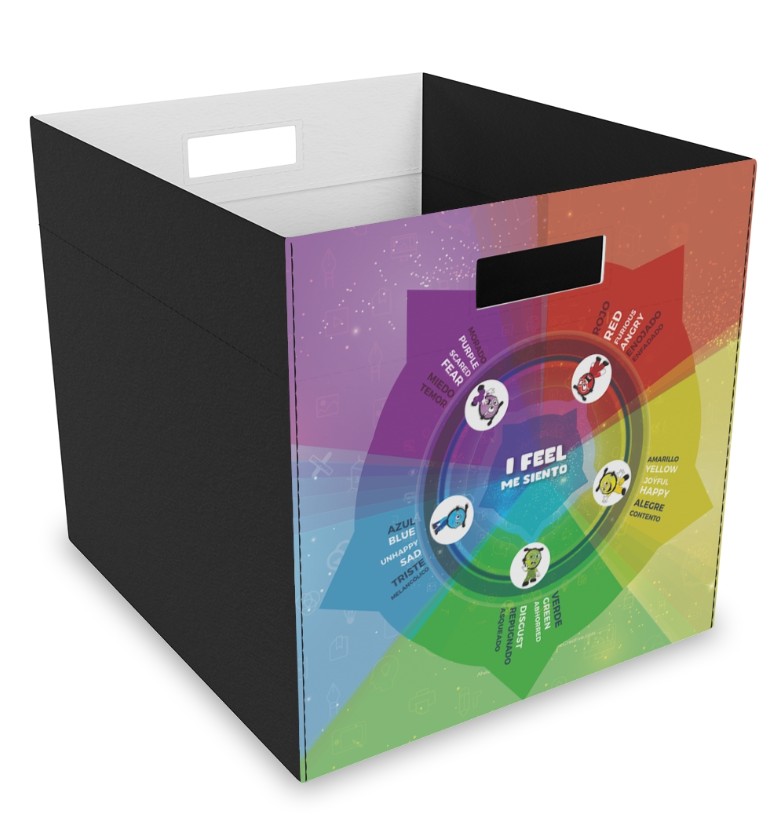
At the heart of CALM & RECONNECT™ is a visual and sensory emotional regulation system.
Children begin by identifying how they feel and selecting the emotion that best represents their current state.
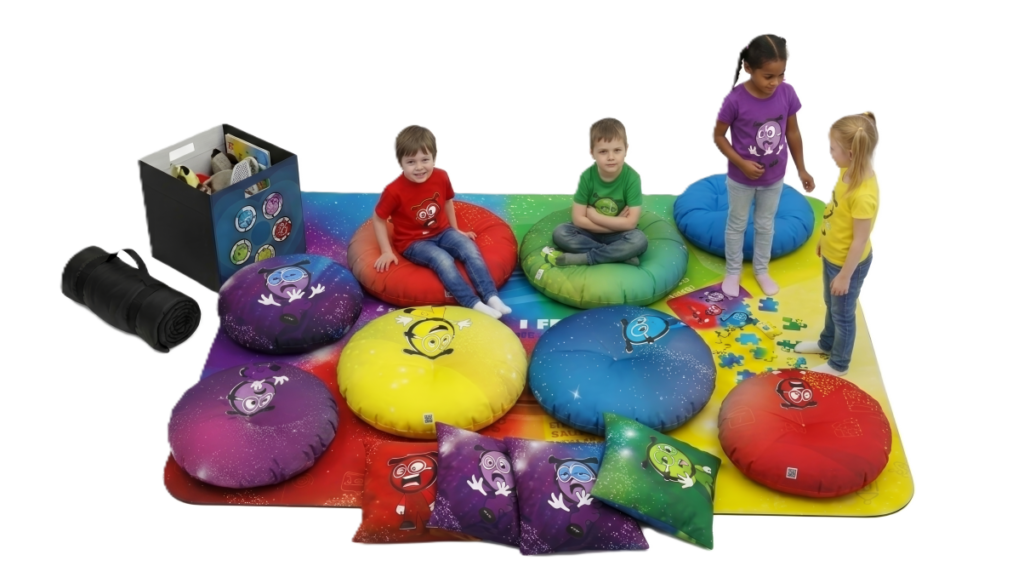
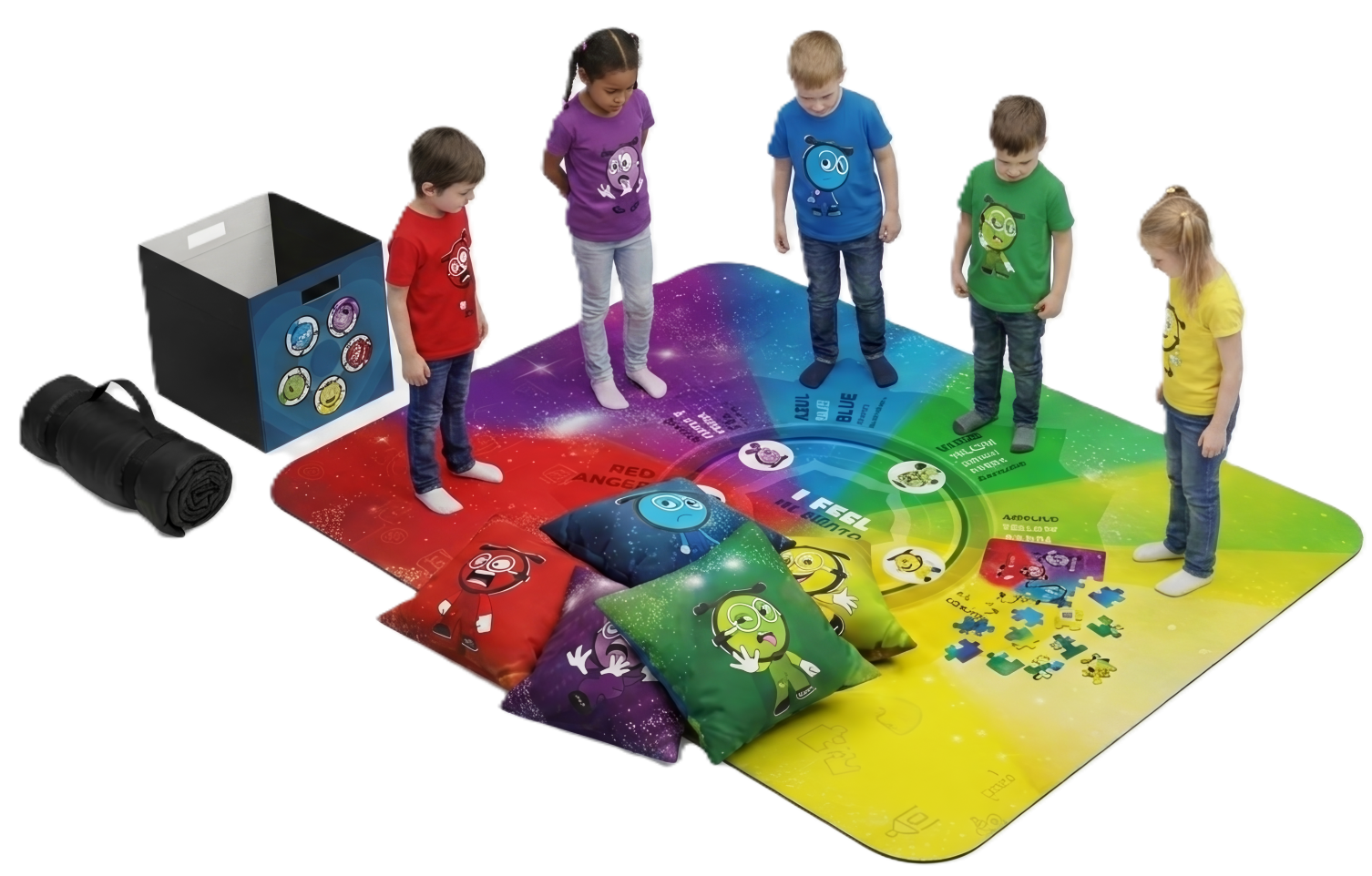
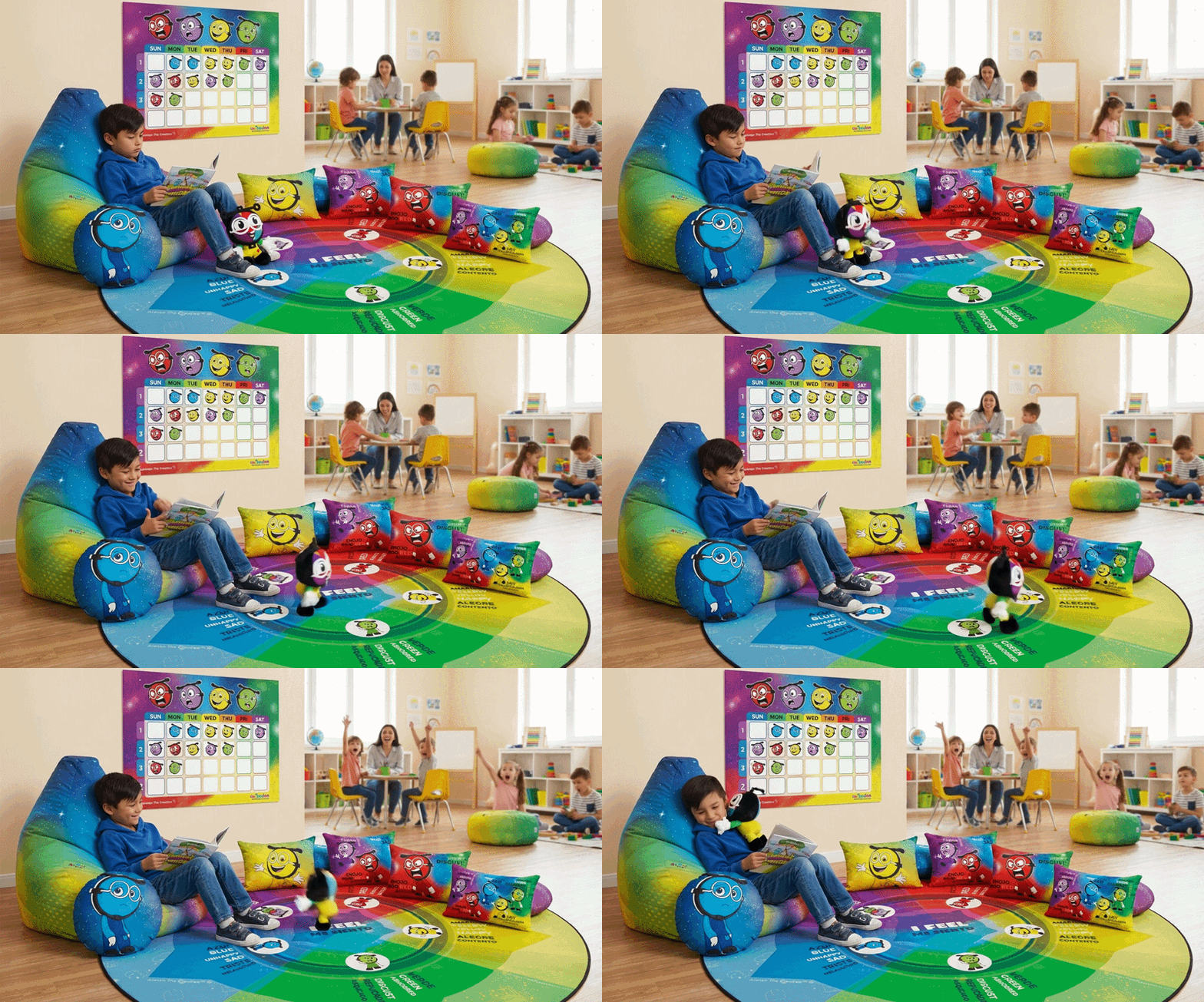
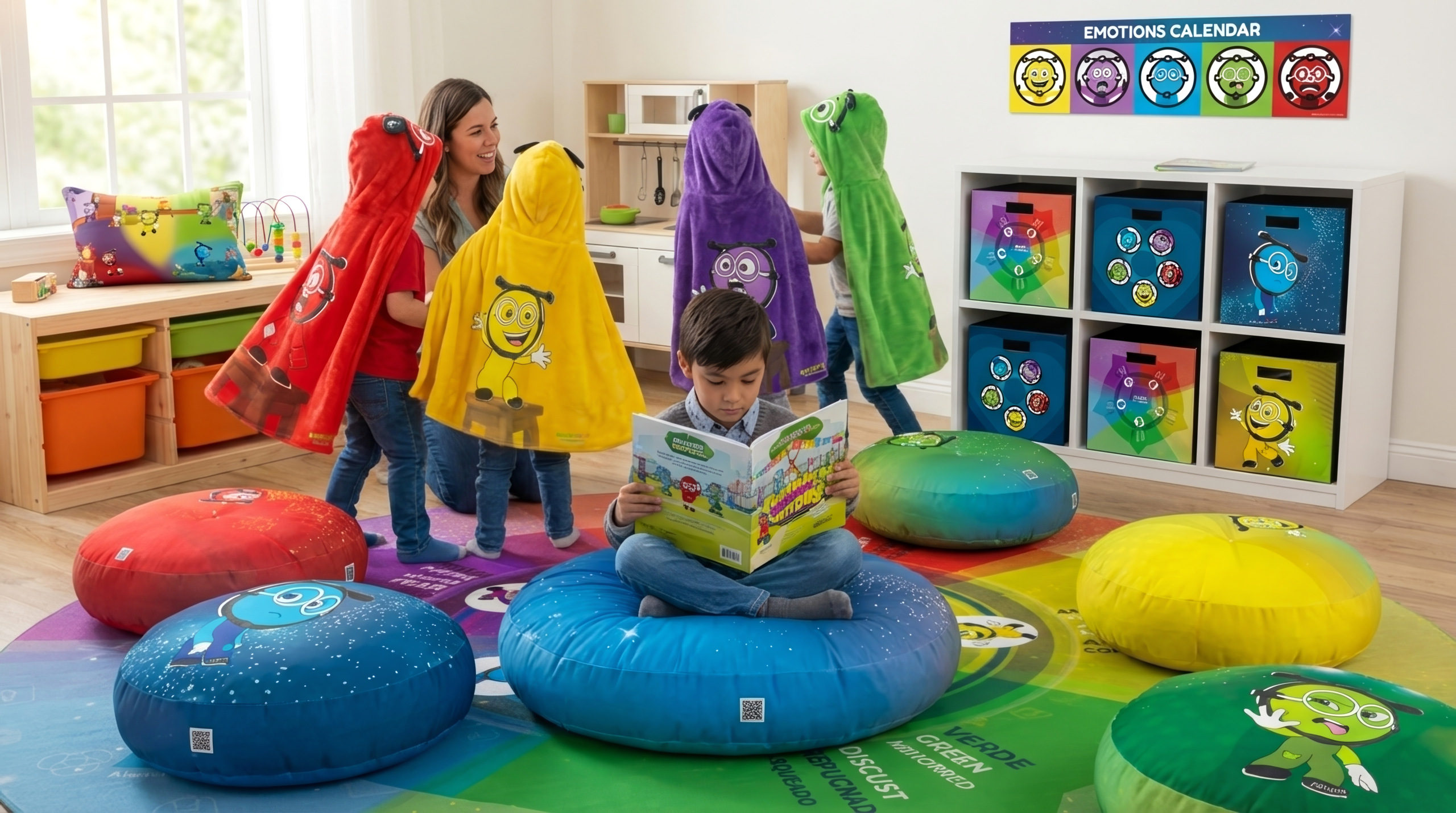
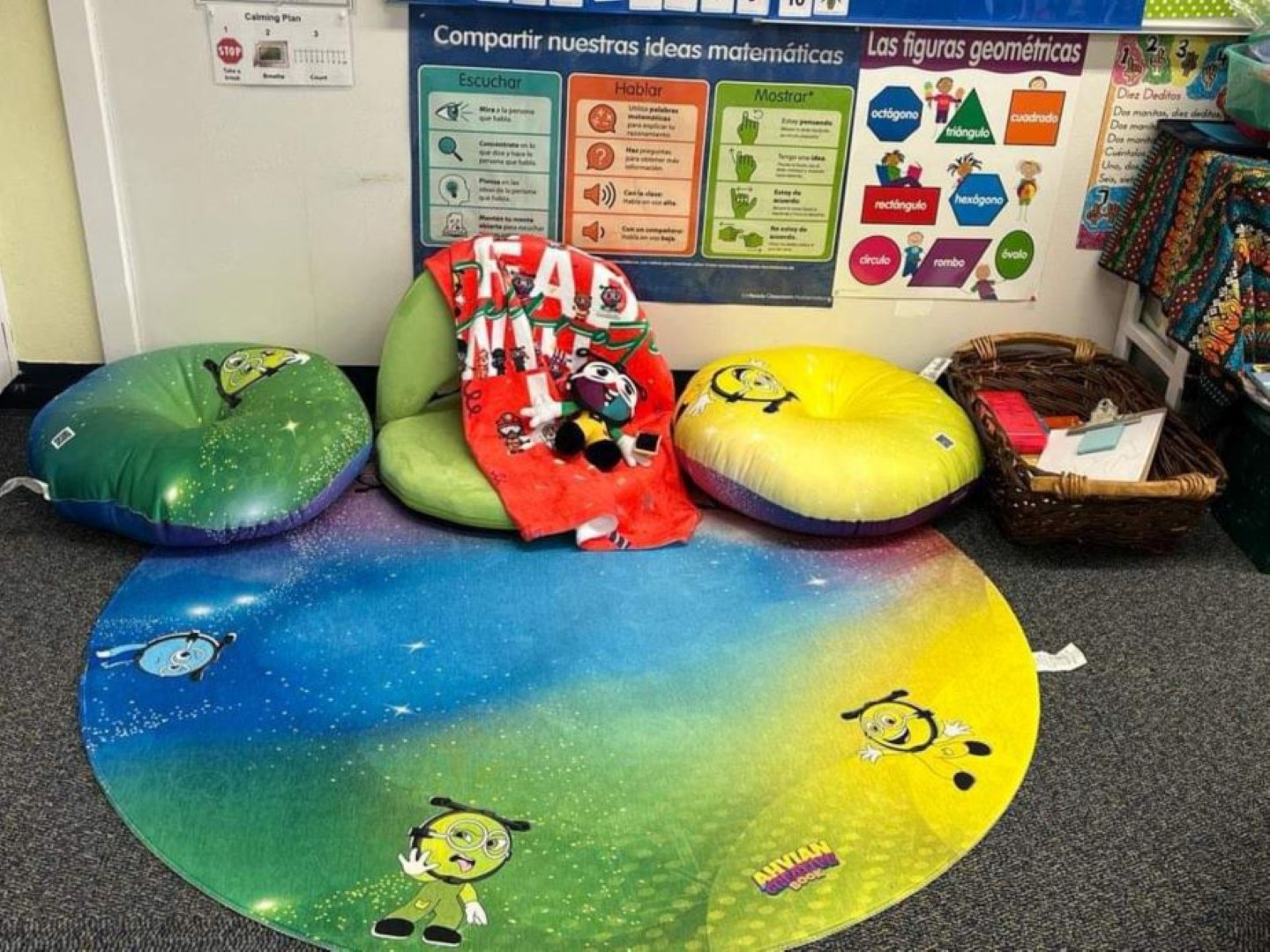
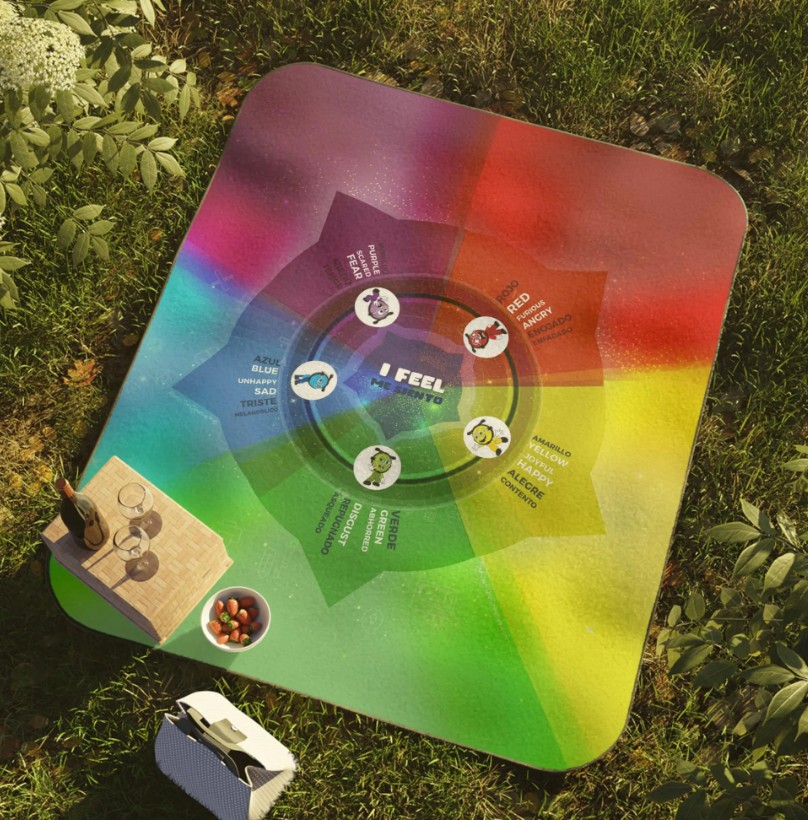
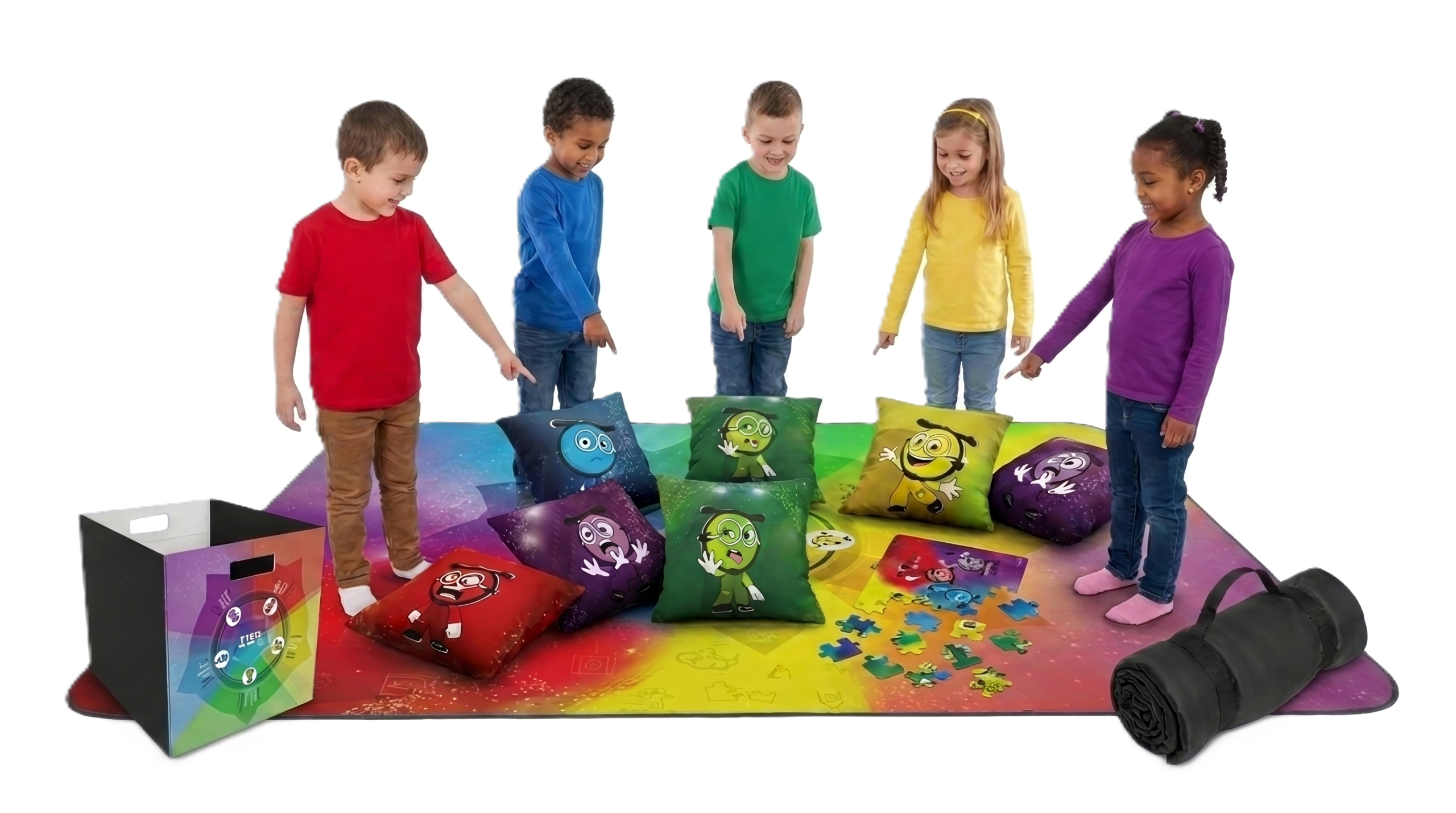
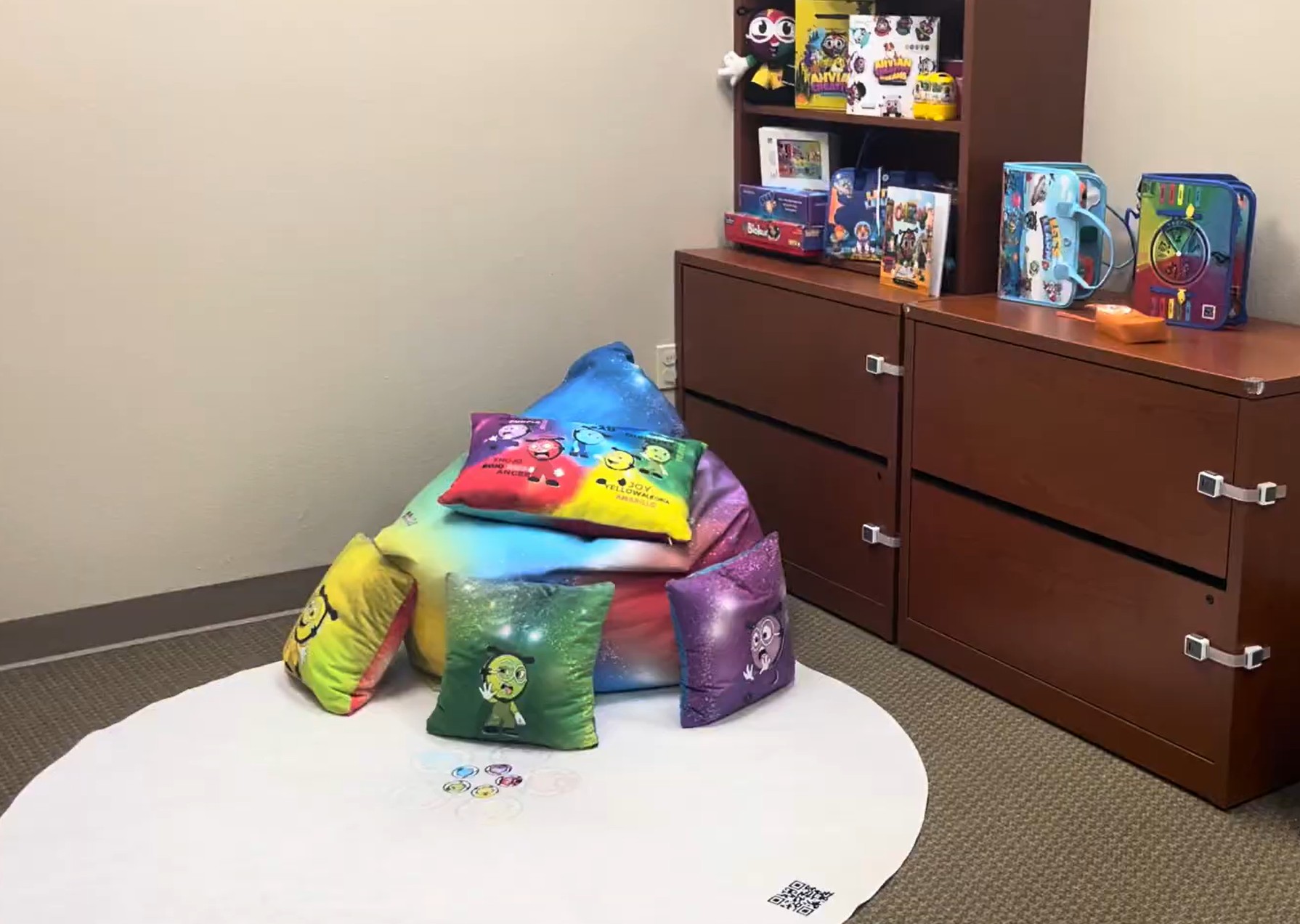
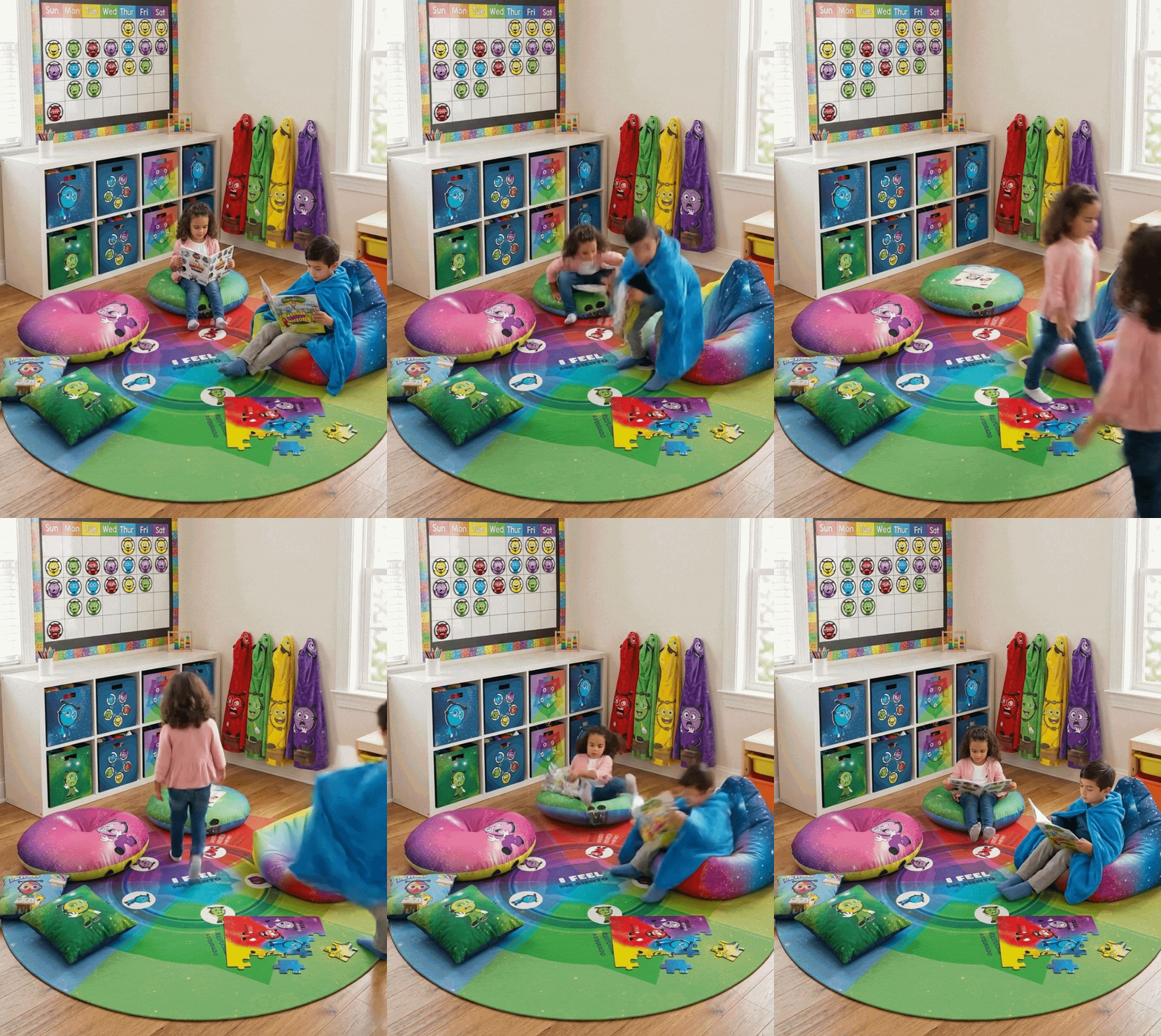
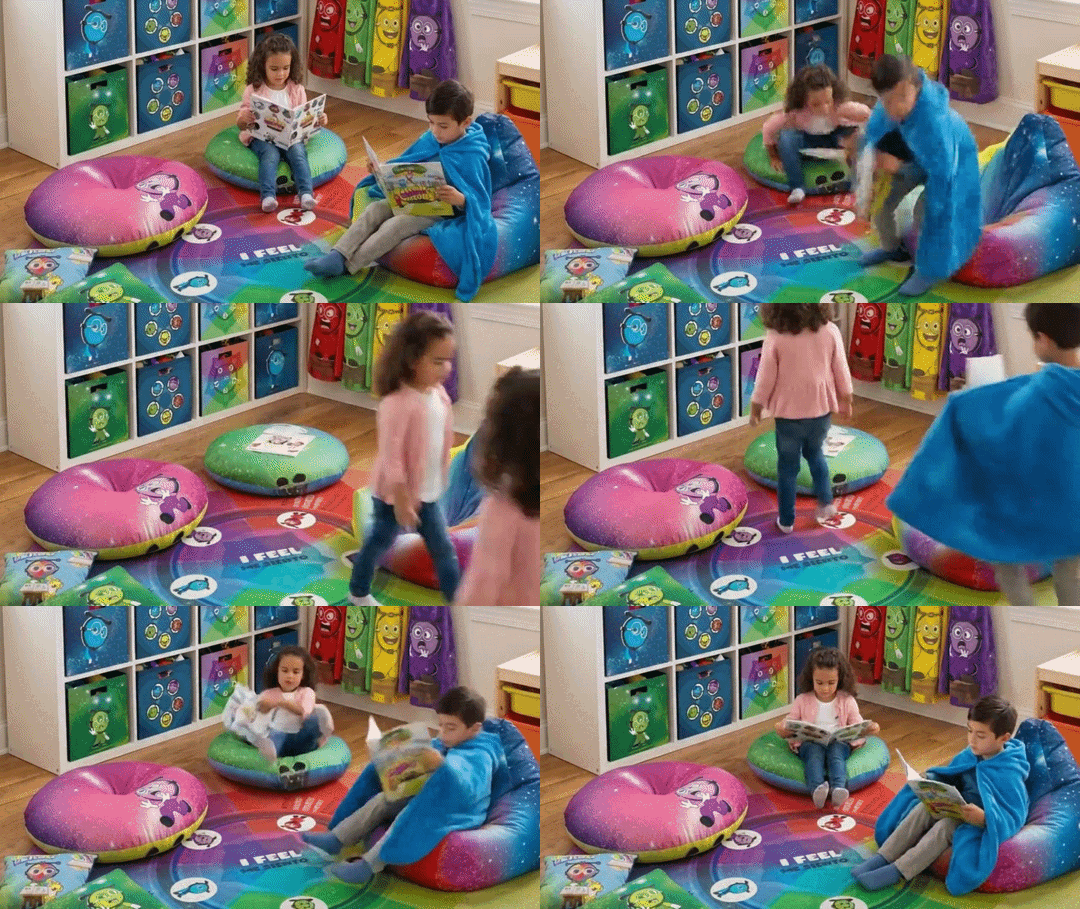
Using the sensory rug, emotion bean bag seats, and emotion cushions, they are encouraged to pause, reflect, and regulate their emotions in a supportive environment.
As their feelings change, children can move to a different emotion seat, creating a visible and meaningful way to communicate their emotional progress.
When they feel calm, confident, and ready, they transition back into classroom learning and social interaction.
💛 Why Educators Love It
CALM & RECONNECT™ helps educators:
- Support emotional regulation without interrupting instruction
- Create a structured and supportive Calm-Down Corner
- Encourage student independence and self-reflection
- Reduce emotional escalations through proactive strategies
- Visually monitor emotional readiness from a distance
- Foster a positive and emotionally safe classroom environment
🧠 Learning Outcomes
Children develop:
- Self-awareness
- Self-management
- Emotional recognition
- Emotional vocabulary
- Problem-solving skills
- Confidence and resilience
- Social-emotional communication
🔹 Aligned With
CASEL Competencies
- Self-Awareness
- Self-Management
- Social Awareness
- Relationship Skills
ELOF Domains
- Social & Emotional Development
- Language & Communication
- Approaches to Learning
- Perceptual, Motor & Physical Development
CDC Developmental Milestones
Supports emotional expression, empathy development, self-regulation, and positive social interaction.
🌟 Signature Moment
“How am I feeling right now?”
Children select the emotion that matches their feelings, use sensory supports to reflect and regulate, and communicate when they are ready to reconnect.
A simple yet powerful process that helps children build lifelong emotional skills while creating a calmer and more connected learning environment.
🧠 Skills Developed
- Emotional awareness
- Self-regulation
- Confidence and self-expression
- Physical coordination and movement
- Bilingual language development
🎯 Learning Flow
Children are guided through a simple process:
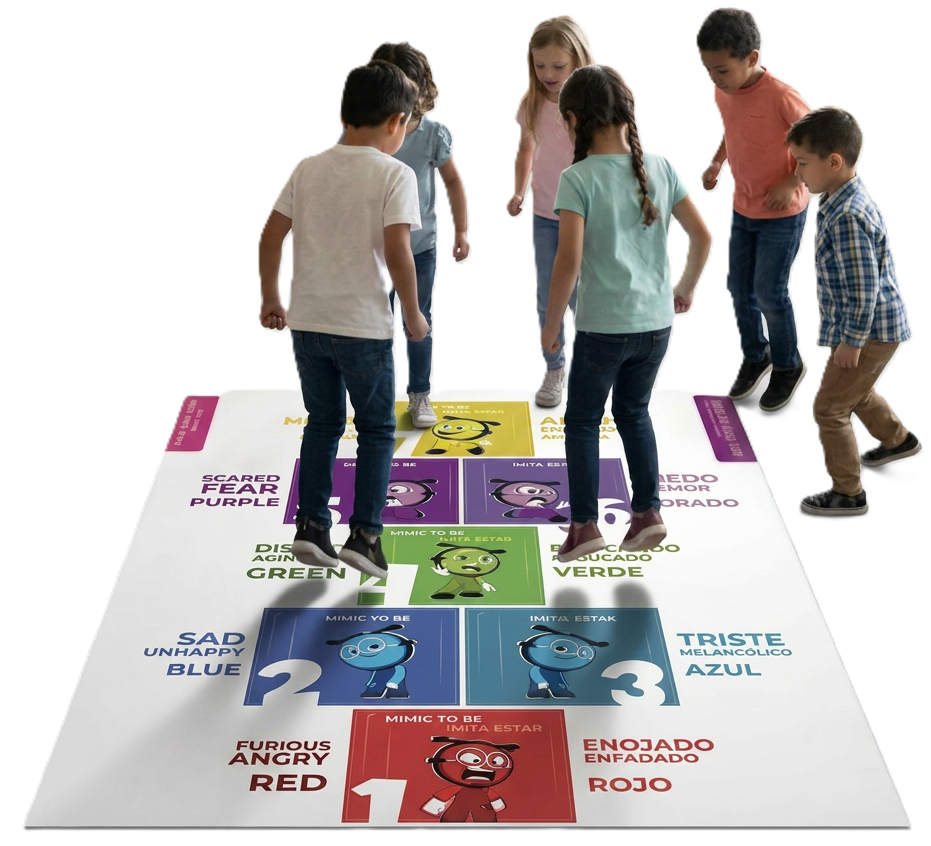
Move, Mimic, Recognize, Express, Regulate
This flow supports emotional growth in a way that feels natural and supportive.
🏫 Where It Can Be Used
Curriculum Move is designed for:
- Classrooms
- Therapy sessions
- Homeschool environments
- Play-based learning spaces
🌍 Bilingual Learning
Each activity supports both English and Spanish language development, helping children connect emotions with words through movement and play.
☀️ A Positive Ending
Every experience ends with:
“I feel happy! / ¡Me siento feliz!”
Helping children leave the activity feeling confident and emotionally supported.
🎉 Experience
Bring movement into learning and support children as they grow emotionally through play.
👉 Explore Curriculum Move
👉 Discover the Social-Emotional Hopscotch Game
5 Emotion
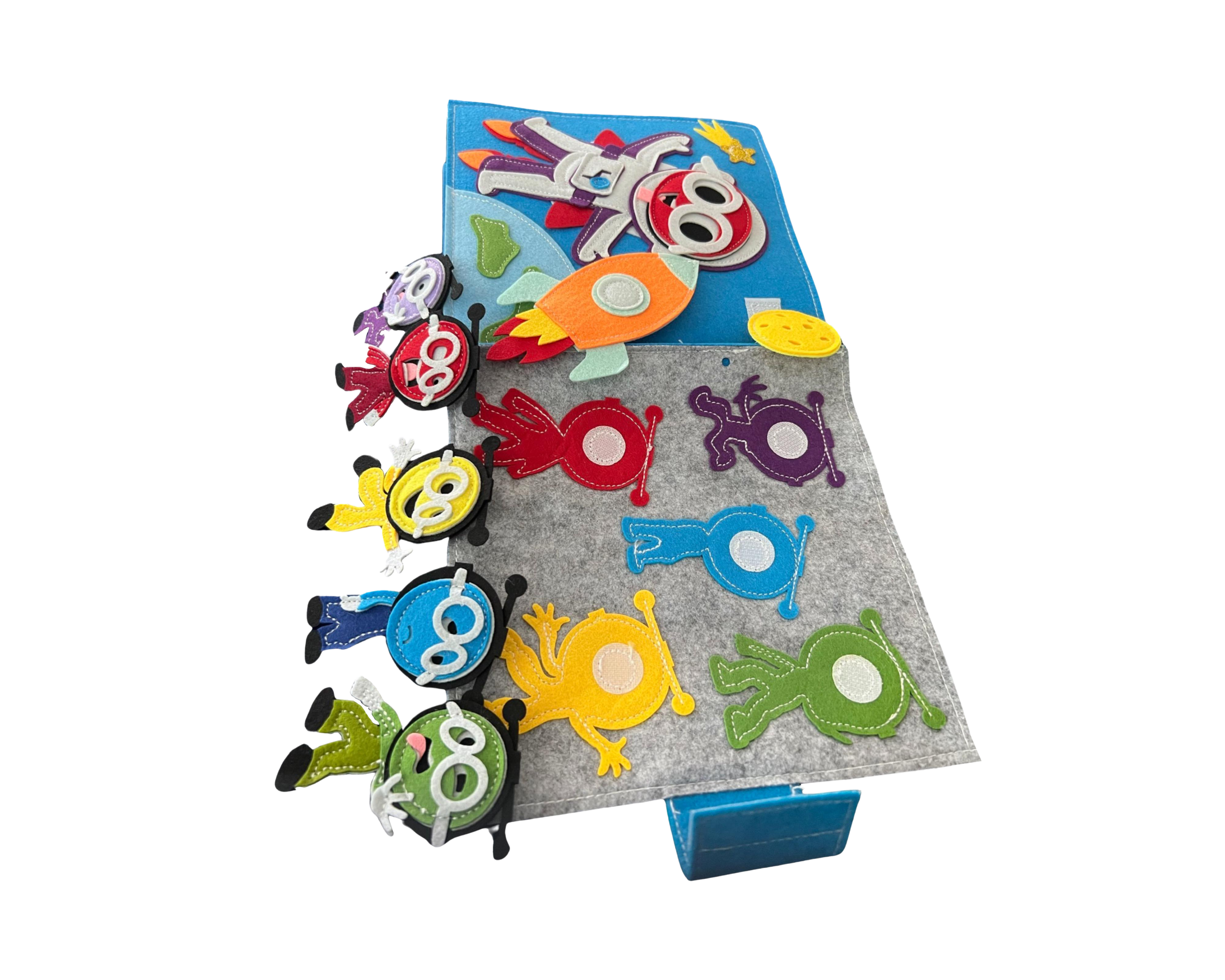
Finger Puppets Set


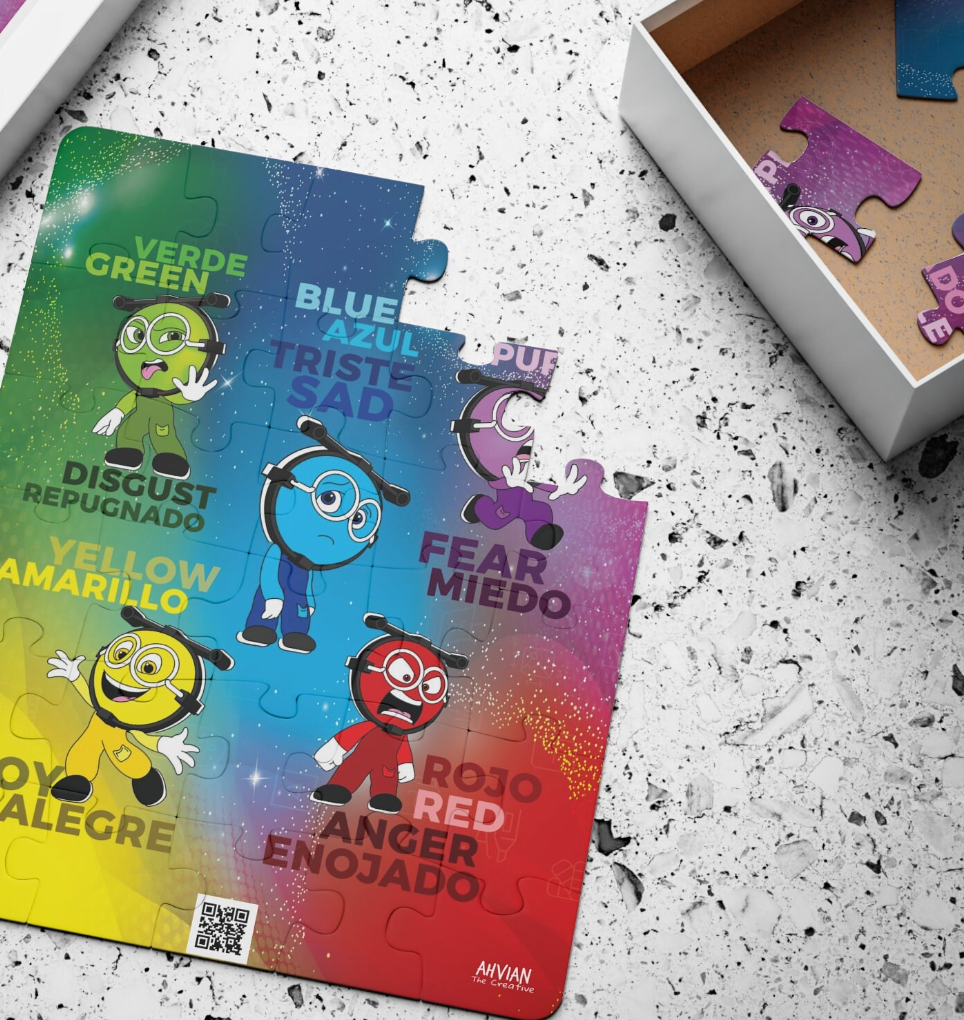
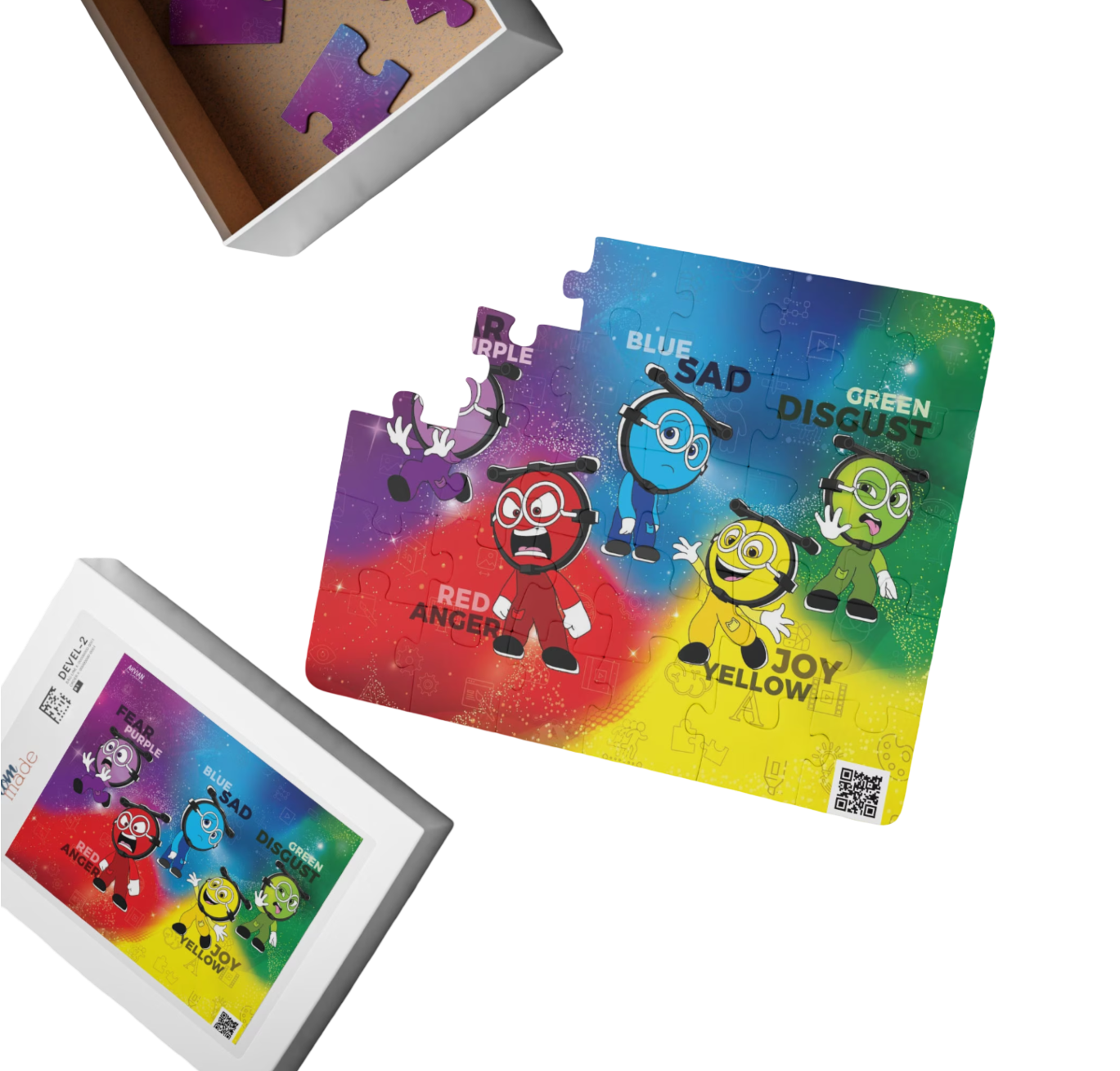
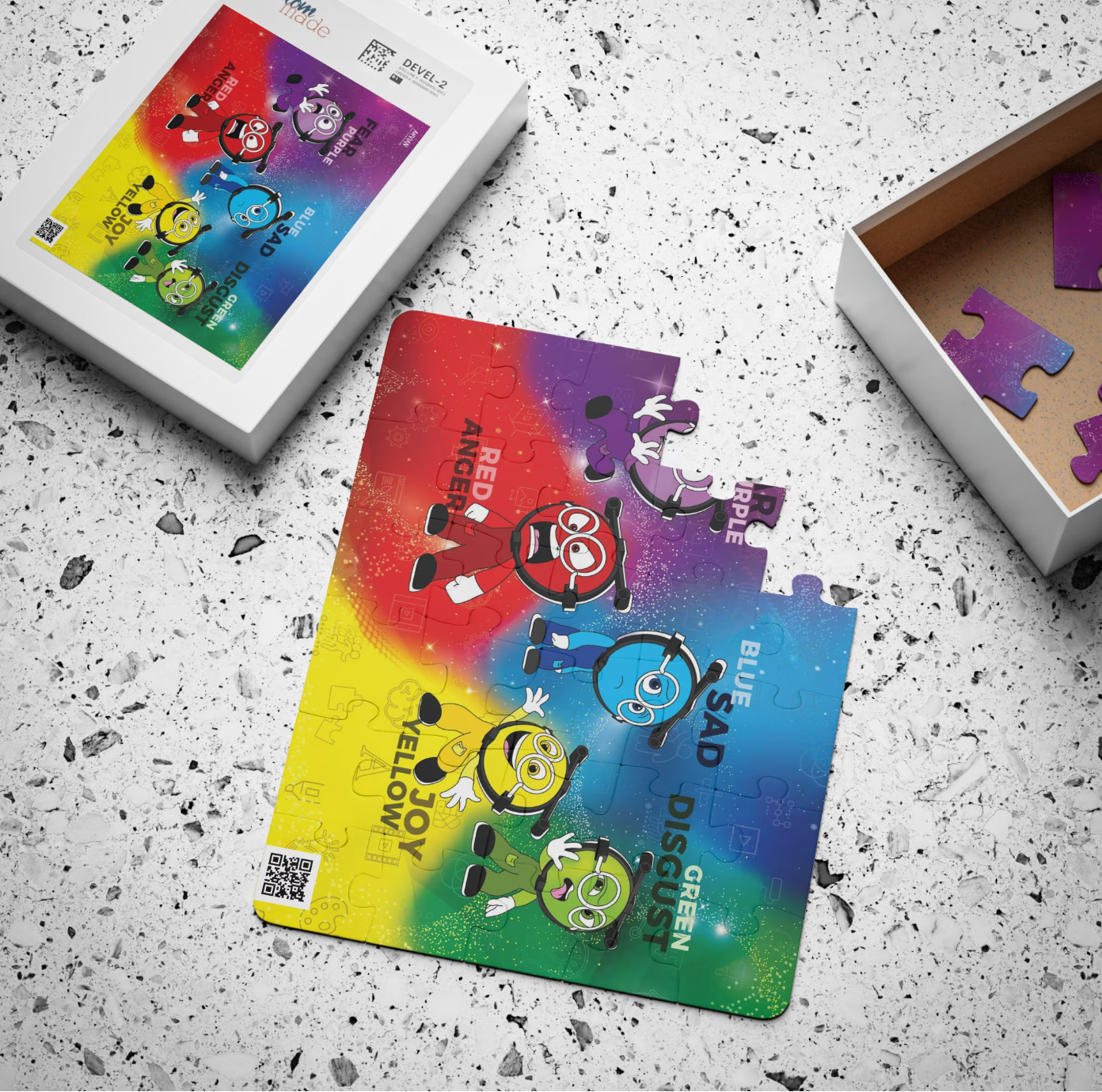
Characters: Joy, Sadness, Anger, Fear, Disgust
Material: Soft felt finger puppets with expressive embroidered faces
Language Support: English and Spanish labels
Target Skills:
- Emotion role-play
- Empathy-building
- Bilingual expression
- Turn-taking and communication
Activities:
🔹 Puppet Circle Talk: Each child wears a puppet and speaks “as the emotion.” Example: “I’m Anger. I feel hot when…”
🔹 Feelings Story Skits: Use puppets to reenact classroom scenarios and brainstorm how each emotion might respond.
🔹 Emotion Hide & Seek: Hide puppets around the room. When a child finds one, they act out that feeling.
🔹 Match the Moment: Children share a personal story and pick which puppet matched their reaction.
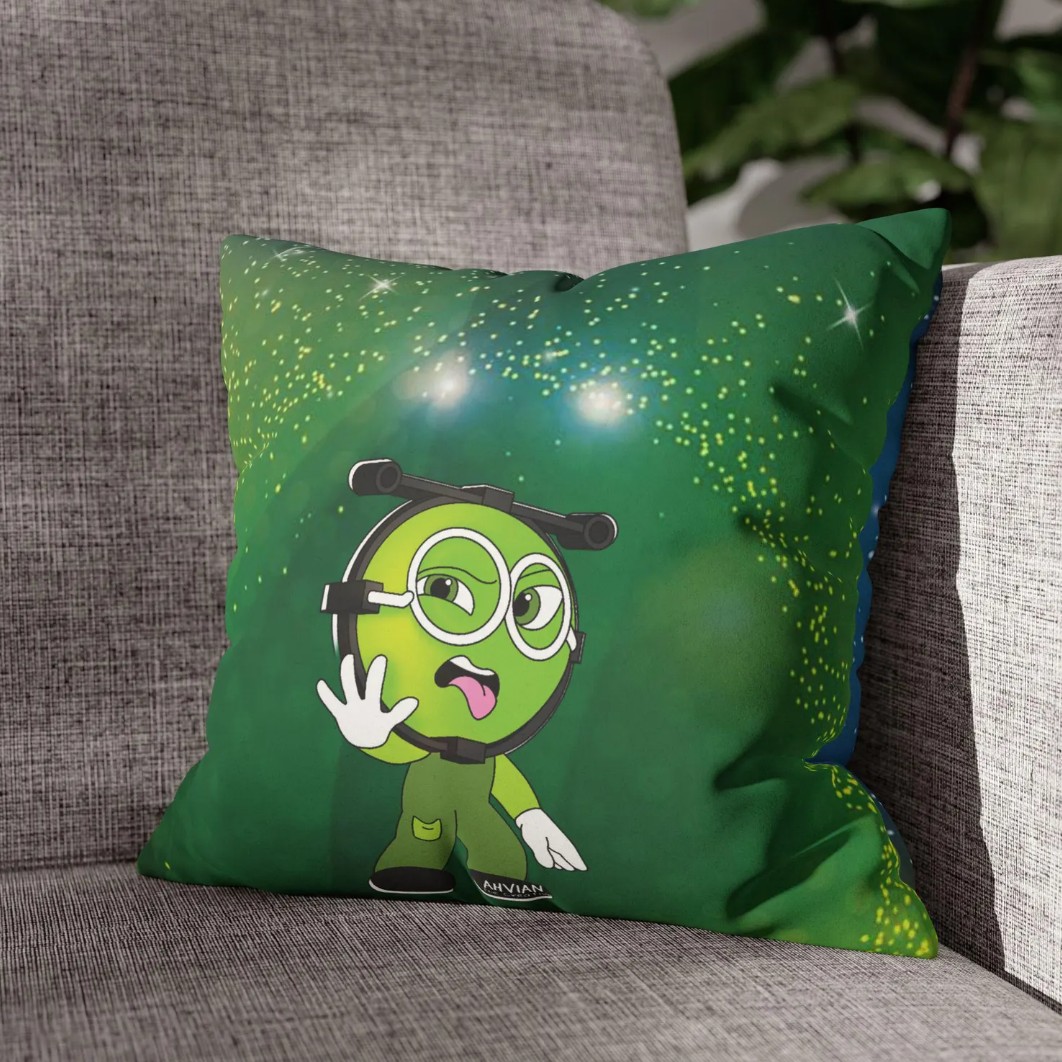
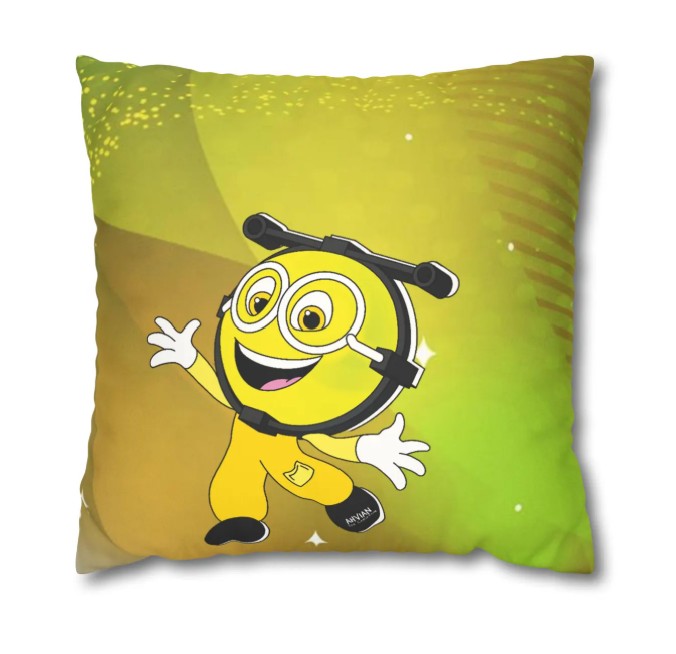
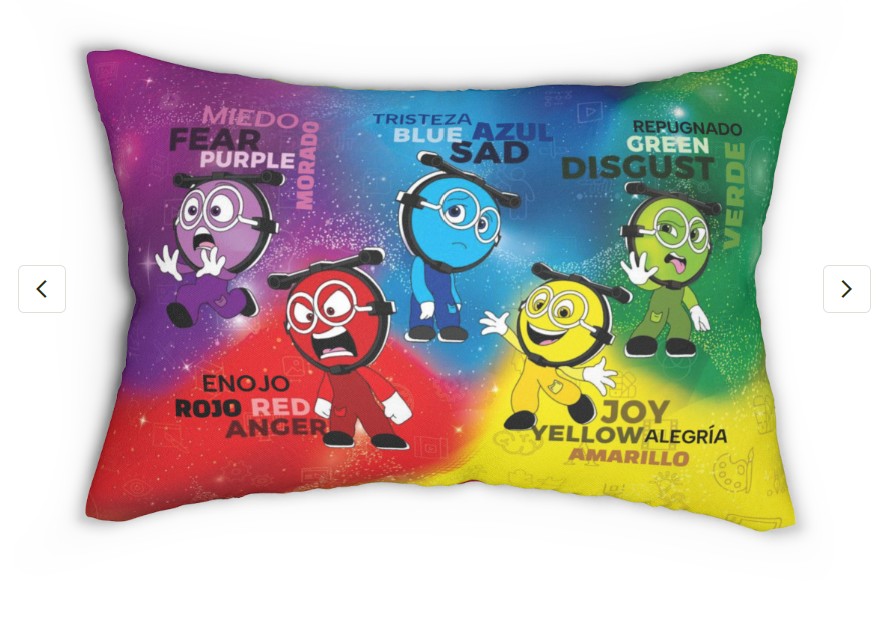
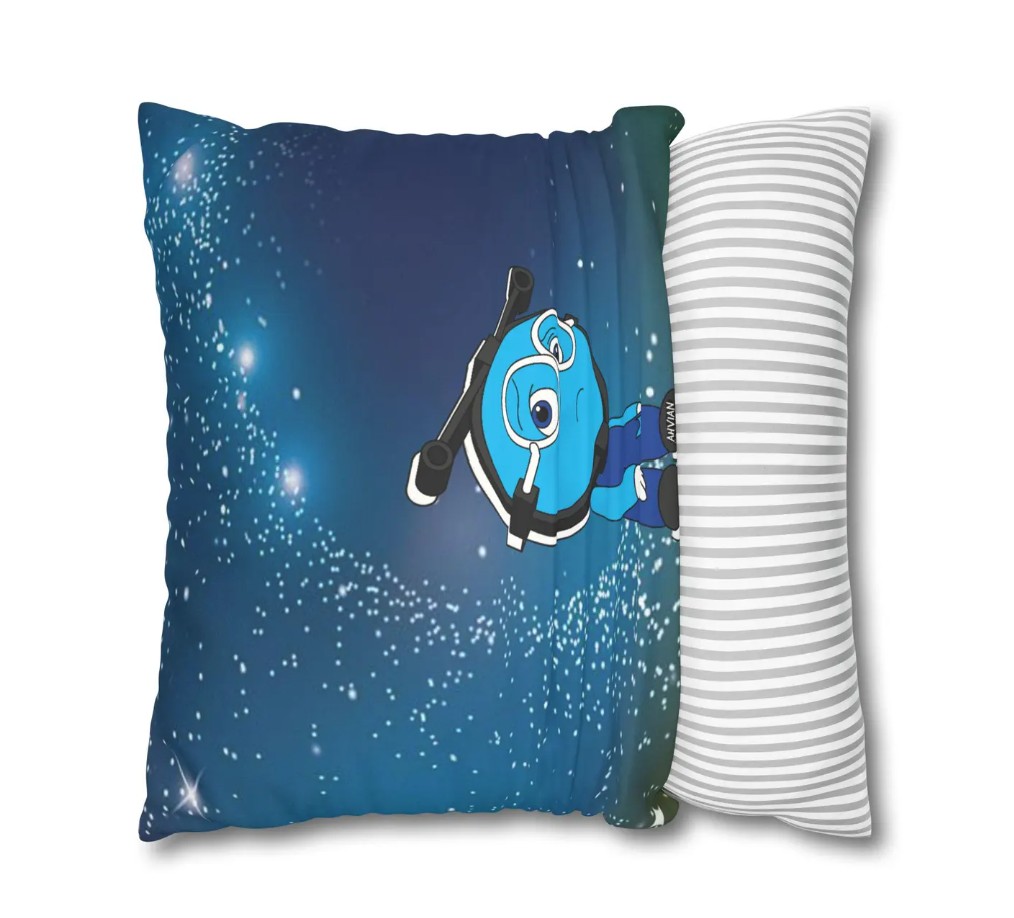
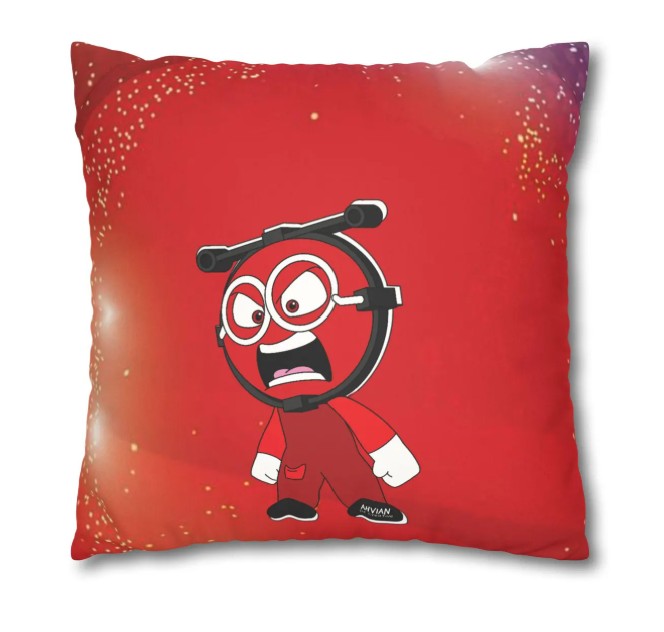
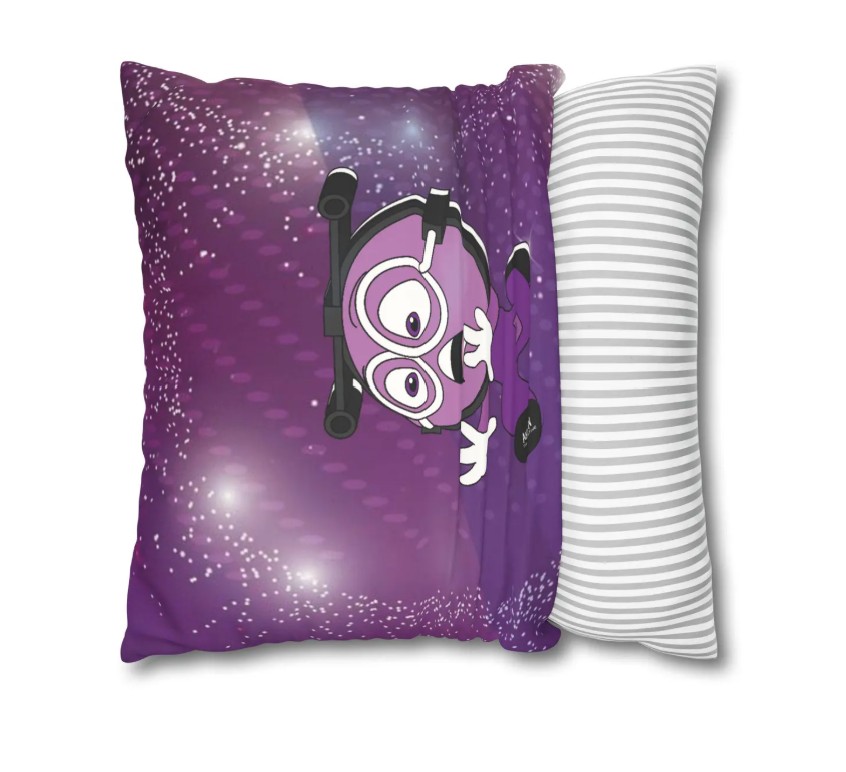
🛏️ Pillows & Calm-Down Corner Pillowcases
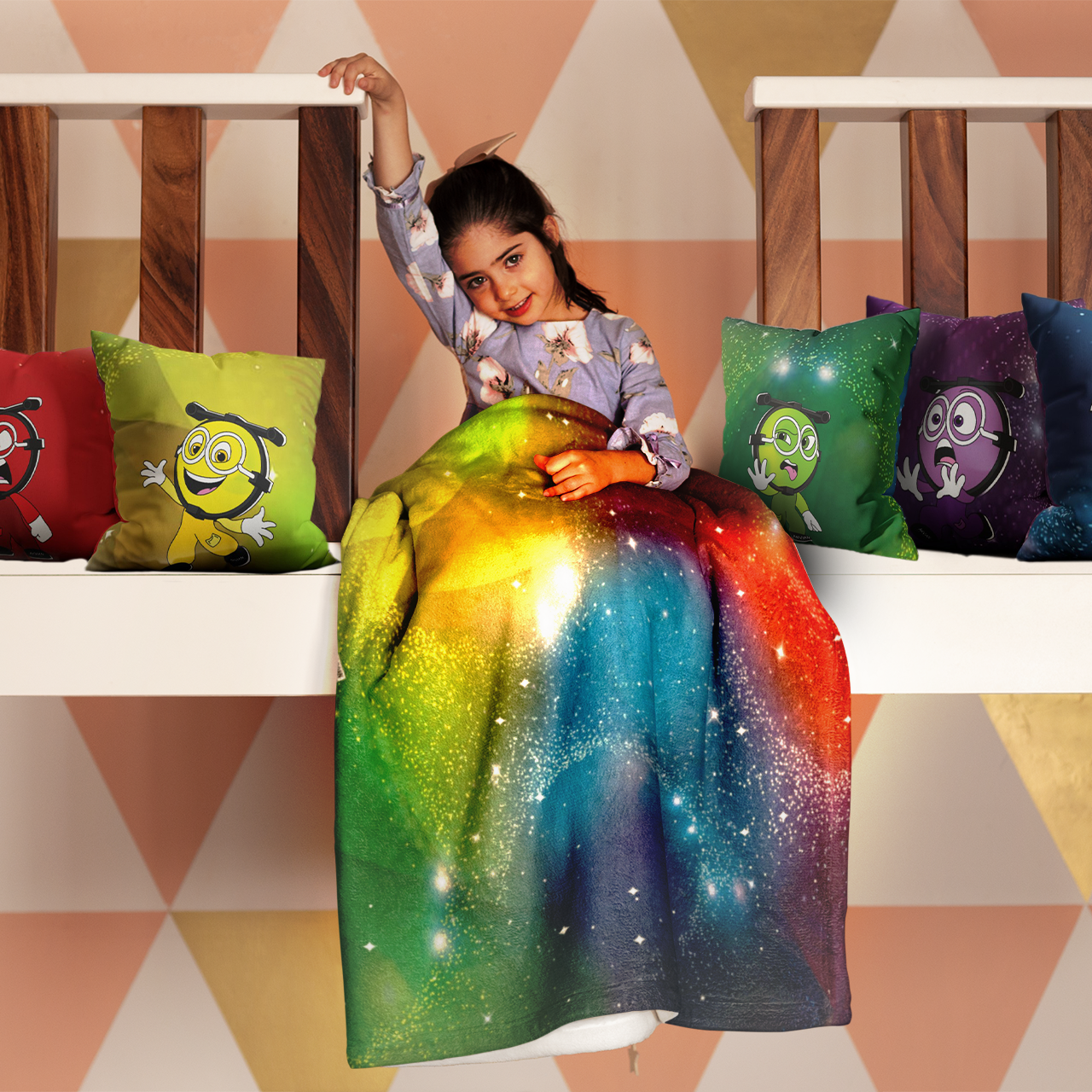
Theme: Cozy visuals with characters and scenes
Activities:
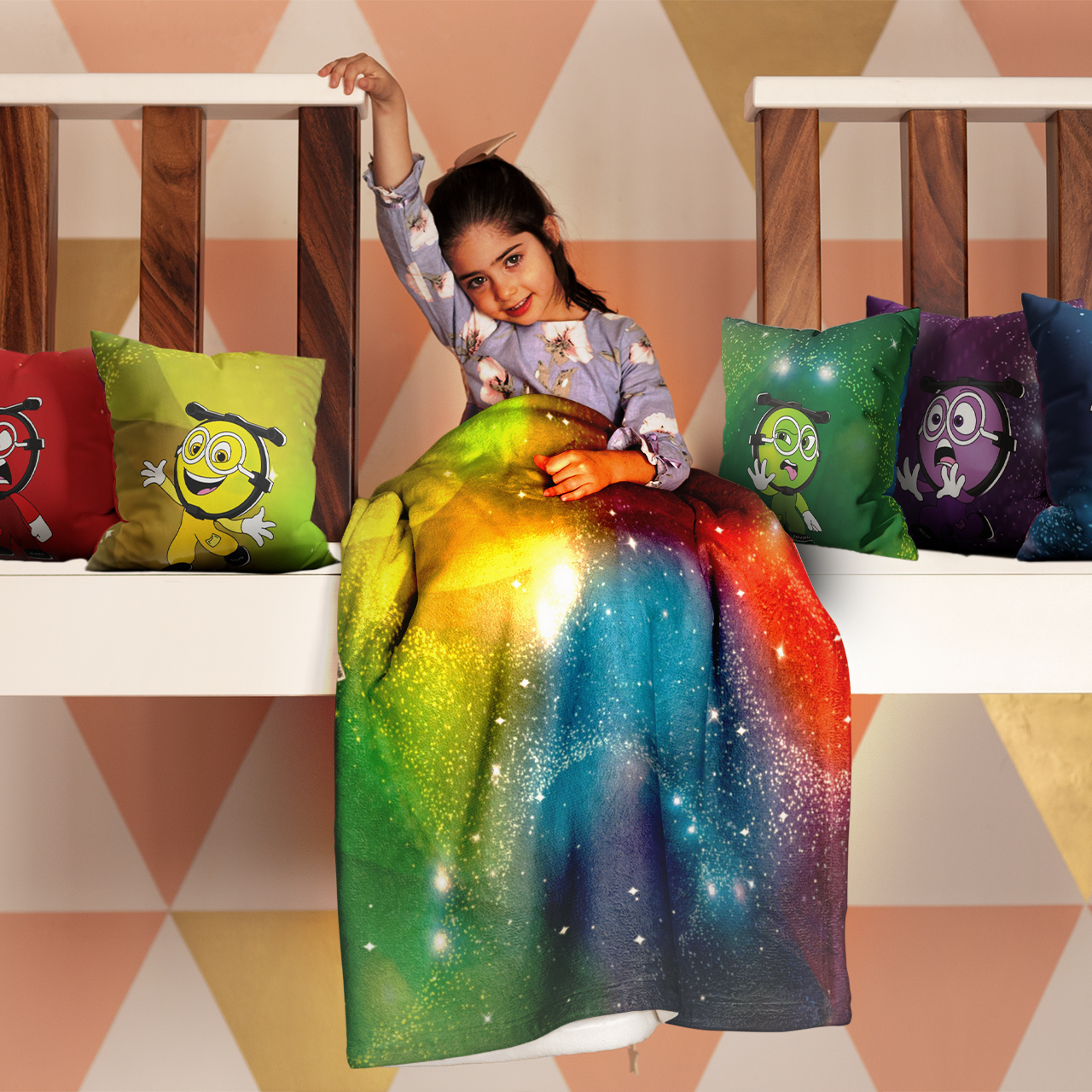
🔹Feeling Hug Time: Pick a pillow, name the feeling, and hug it while taking deep breaths.
🔹Emotion Toss: Toss a pillow; whoever catches it must say a situation that fits the emotion shown.
🔹Mindfulness Routine: Use pillows to teach breathwork and emotional reset.
🔹Quiet Corner Reset: Combine pillow, book, and rug zone for 5-minute calm-down moments.
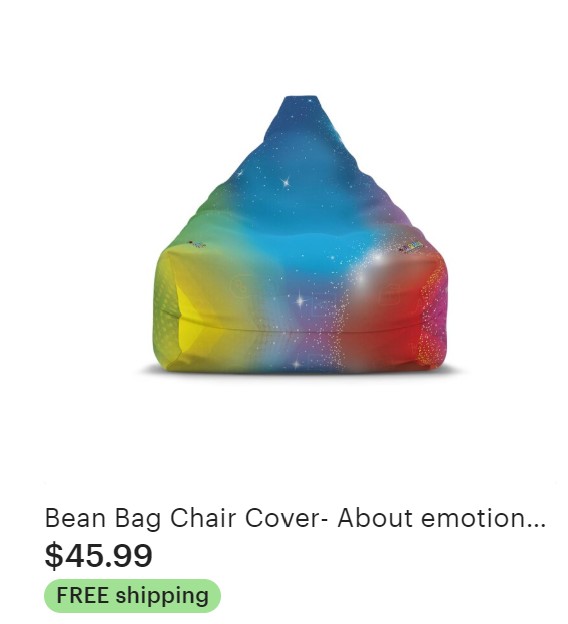
🪑Bean Bag
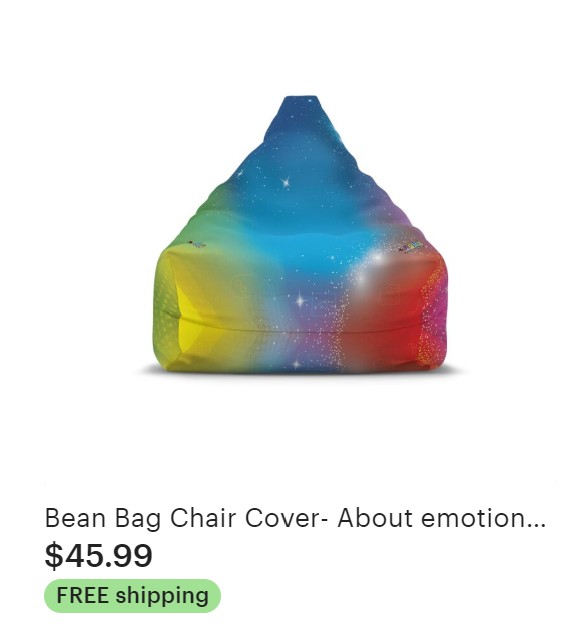
Chair Cover – Emotional Galaxy
Theme: Colorful space to support calming and regulation
Activities:
🔹 Galaxy Breathing: Sit back and imagine floating through the emotions in color order (Red, Yellow, Green, Blue, Purple).
🔹 Color-Based Storytelling: “Tell me a story from the yellow part… what happened that made you feel joy?”
🔹 Movement + Sit: After a motor break, use the chair as the cool-down zone.
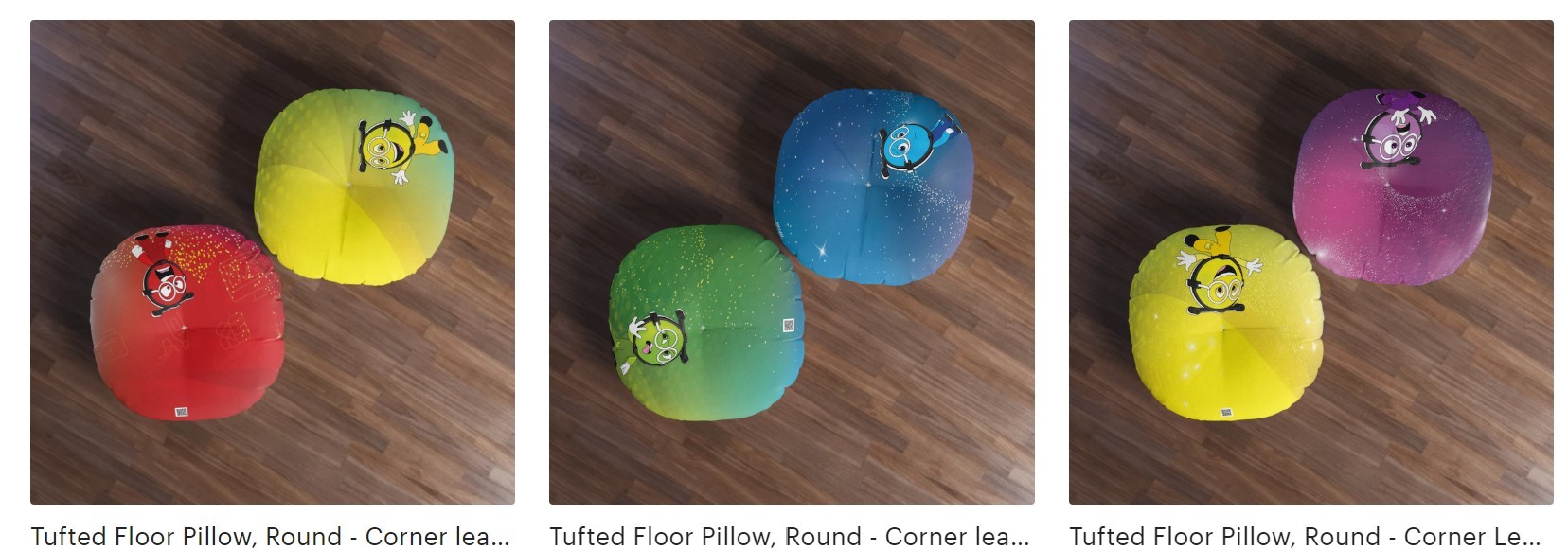
🏠Tufted
Floor Pillows
Theme: Emotions as large visual, tactile seating cues
Activities:
🔹 Emotion Stations: Place pillows in corners; rotate through them with expressions or scenarios.
🔹 Feelings Relay: Run to the pillow that matches how a story character feels.
🔹 Feelings Theater: Sit on a pillow and act out the emotion.
🔹 Sticky Card Match: Use sticky emotion characters as flashcards to find their matching pillow.
🌈Round
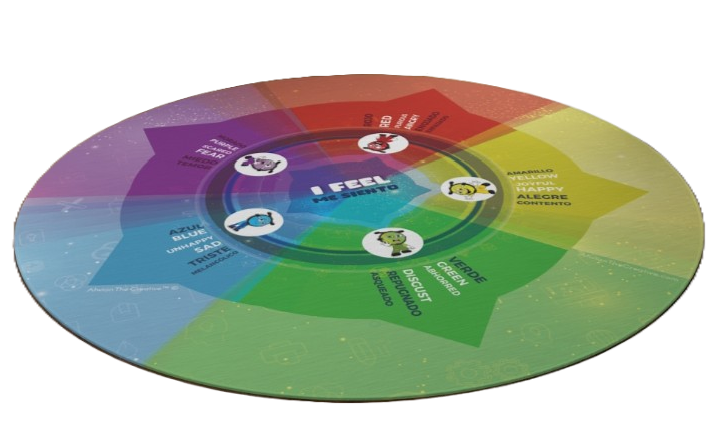
Emotion Rug
Theme: Interactive play with bilingual emotion labels
Activities:
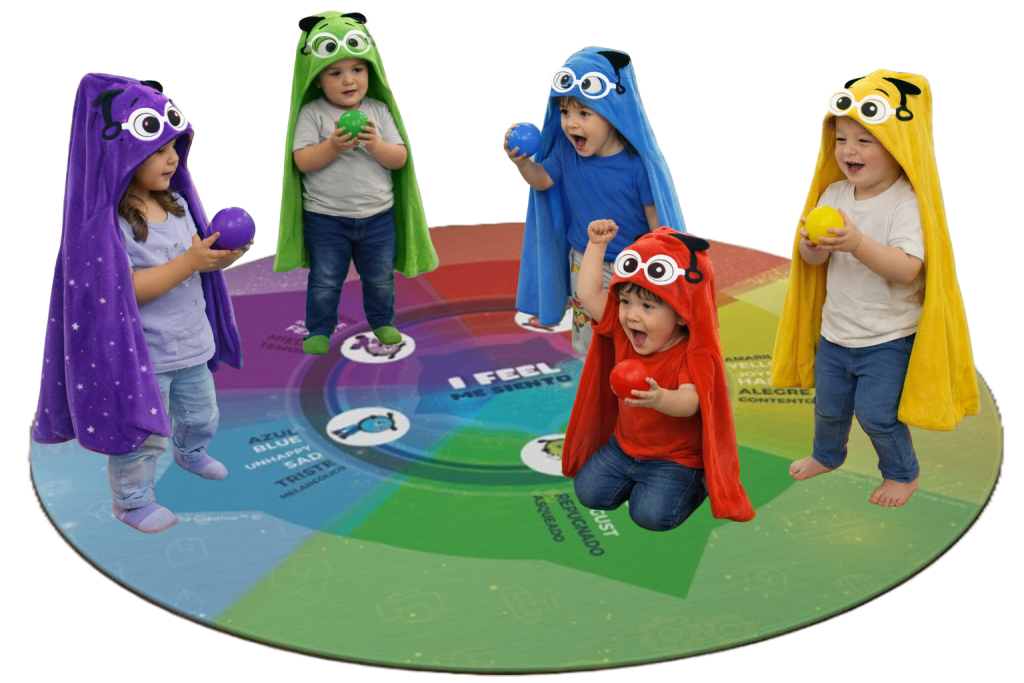
🔹 Freeze Dance & Mimic: Move around the rug and freeze on emotion cue.
🔹 Feel + Move: Each color has a move: Red = stomp, Yellow = hop, Blue = curl, etc.
🔹 Rug Yoga Routine: Each section leads a calming pose.
🔹 Emotion Spinner: Use a spinner to pick a section and do the associated activity.
🔹 Group Circle Time: Share “I feel ___ when ___” while standing on a matching zone.
Assessment & Reflection

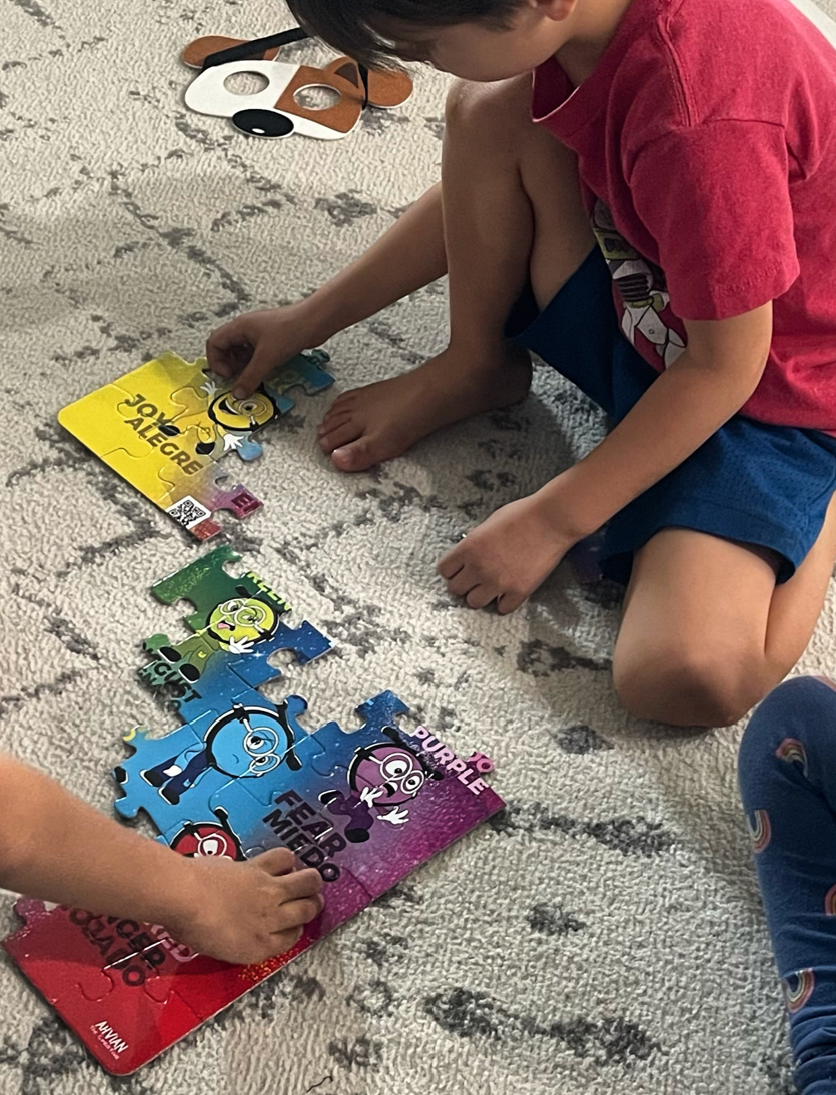
✔ Color Your Feeling: Children color an outline of the 5 characters to show which one matched their day.
✔ My Emotion Journal: Add a printable sheet for students to reflect:
“Today I felt ___ because ___.”
✔ Thumbs Up / Down / Middle: Quick, kid-friendly way to check comfort level after emotional discussions or activities
Reflection Prompts:
- “What did you learn about your feelings today?”
- “How did someone else’s feelings help you understand your own?”
- “Was there a time you felt calm after being upset? What helped?”
For more inspiration on how to bring these tools to life, watch this video and explore hands-on ideas to engage young learners with empathy, creativity, and joy.


You must be logged in to post a comment.