
Alice Miller's Psychological Work:

Why Emotional Learning Must Begin in Early Childhood

The hidden emotional cost of being the “good child.”

What happens when a child learns to please everyone else before learning to understand their own emotions? A story about childhood, emotional silence, and why we must teach children that their feelings matter.  From her pioneering writings in 1979 to today’s bilingual, play-based social-emotional learning. Before children have the words to explain their emotions, they are already communicating what they feel.

Her work raises a question we believe every parent, educator, and professional should consider: If childhood emotional experiences can influence us throughout life, why wait to help children understand their feelings?

A QUESTION THAT STILL MATTERS

“Good behavior” does not always reveal what a child feels inside.

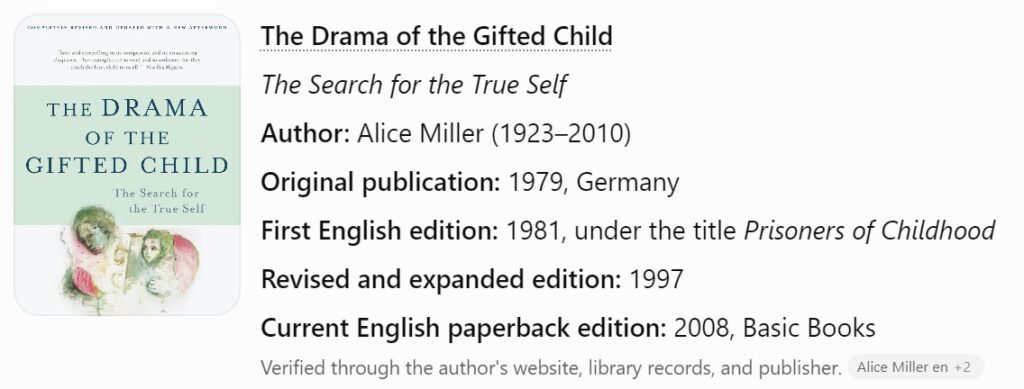
1979

The Drama of the Gifted Child

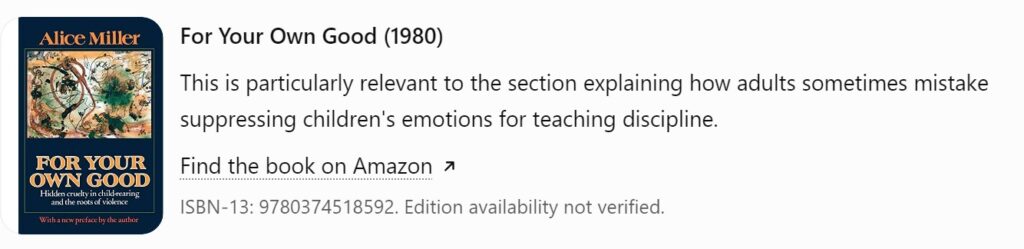
1980

For Your Own Good

From psychoanalytic questions to everyday emotional learning.

After more than two decades of psychoanalytic practice, psychologist Alice Miller published The Drama of the Gifted Child in 1979, exploring how childhood emotional experiences, unmet emotional needs, and the pressure to meet adults’ expectations may influence a person’s development and relationships later in life.

THE STORY BEGINS

What happens to the feelings that never find a voice?

Alice Miller’s work deeply resonates with the educational philosophy behind Ahvian The Creative™. Her exploration of childhood emotional needs and the possible long-term effects of suppressing feelings reinforces our conviction that emotional understanding deserves attention from the earliest years of life.

Some children learn to stay quiet when they are hurt. Some learn to smile when they are uncomfortable. Others become the responsible child, the helpful child, the child who never causes trouble. But what if the child who seems perfectly fine has simply learned not to show what they feel? 

The question is not simply “Is this child behaving well?”

It is also: “Does this child feel safe enough to express sadness, anger, fear, and need?”

We believe children should have opportunities not only to recognize and express their own emotions, but also to understand the feelings of others, develop empathy, communicate their needs, and build meaningful relationships.

01 / THE PSYCHOLOGIST

Alice Miller asked us to look beyond obedience.

Alice Miller (1923–2010) was a Swiss psychologist and psychoanalyst who practiced and taught psychoanalysis for more than twenty years. In 1979, she published a book questioning the emotional costs of living primarily for adults’ approval.

Her clinical writings describe how some children become highly attuned to caregivers’ expectations while losing touch with their own emotional needs. This is a psychoanalytic perspective — not proof that every cooperative child is emotionally suppressed.

THE CENTRAL INSIGHT

A child can adapt remarkably well — and still need help finding their own voice.

Miller’s interpretation invites reflection, not diagnosis.

02 / THE BOOKS

Why Social-Emotional Learning Matters in Childhood

These are historical psychoanalytic works, not controlled studies of children or evaluations of today’s SEL programs. 

Two books. Two enduring questions.

Before children can explain what they feel, they are already communicating through emotions. A baby cries before learning the word sad. A toddler reaches for comfort before being able to explain fear. A young child may experience frustration long before developing the language to describe it. These early emotional experiences are part of how children begin communicating, connecting, and discovering the world around them.

But what happens when children repeatedly learn that certain feelings should not be expressed?
In 1979, after more than two decades of psychoanalytic practice and teaching, psychologist Alice Miller published The Drama of the Gifted Child. Her work challenged the belief that being obedient, successful, or agreeable necessarily means a child is emotionally well. 

1979 / BOOK ONE

The Drama of the Gifted Child

Originally published in German in 1979; first released in English in 1981 as Prisoners of Childhood. Miller examined how some children learn to prioritize their caregivers’ emotional expectations over their own needs.

1980 / BOOK TWO

For Your Own Good

Published in German in 1980, this book challenged harsh child-rearing practices. Miller discussed “poisonous pedagogy,” a historical concept describing discipline grounded in humiliation, fear, and unquestioning obedience.

03 / THE ADULT WHO WAS ONCE A CHILD

The child grows up. Do the feelings disappear?

Early relationships can influence how people understand themselves, express needs, and relate to others. Possible patterns are not inevitable outcomes. 

Miller explored how some children become so attentive to the needs and expectations of adults that they learn to suppress their own feelings. She suggested that these patterns can continue into adulthood, affecting how people recognize their needs, express emotions, and form relationships. Her work raises a question that remains deeply relevant:

If what children learn about their emotions can influence them long after childhood, why would we wait to teach emotional understanding?

Today, developmental research helps us understand the importance of responsive relationships, early communication, emotional vocabulary, and opportunities to practice social-emotional skills. Social-emotional learning is not about preventing children from experiencing anger, sadness, fear, or frustration. It is about helping them recognize those feelings, communicate their needs, develop ways to respond, and understand that emotions are part of being human.

01

Asking for comfort

An adult who learned that sadness was unwelcome may find it difficult to ask for reassurance.

02

Setting boundaries

Someone taught to suppress frustration may struggle to communicate disagreement.

03

Knowing their needs

Someone who always prioritized others may have difficulty identifying what they themselves feel.

“If early experiences matter, why would we wait to help children understand their emotions?”

04 / BEFORE SPOKEN WORDS

Before children have the words, they are already communicating.

A baby cries, smiles, reaches for comfort, or turns away. A toddler points, gestures, and seeks closeness before being able to explain every feeling. These early signals are part of communication.

Responsive adult-child interactions can help connect experiences with language and meaning. Emotions are not the only basis of communication: attention, gestures, and social interaction matter, too. 

THE LANGUAGE BRIDGE

Feelings → Connection → Words

“You seem frustrated. Can I help?”
A small response can offer recognition, support, and vocabulary.

Our commitment is to help sustain these learning opportunities every day — in classrooms, homes, and clinical or therapeutic environments.

05 / RECOGNIZING OTHERS

Emotional literacy is also about the feelings of others.

Children can explore empathy and perspective-taking through stories, conversations, and role-play. It is important to ask and listen, rather than assume what someone feels. Through storytelling, creative expression, movement, hands-on activities, and guided interaction, Ahvian The Creative™ brings together emotional vocabulary, bilingual literacy, and social-emotional learning. Because emotional literacy is not one lesson. It is an ongoing part of helping children understand themselves, communicate with others, and grow.

NOTICE

What might they feel?

A child notices that a story character or classmate may be upset.

ASK

How can I understand?

The child learns to ask questions and make space for someone else’s answer.

RESPOND

What would help?

The child can practice a caring response — listening, inviting, or asking an adult.

06 / WHY PLAY-BASED SEL

Words are the beginning. Practice makes them meaningful.

Children need opportunities to explore, repeat, and use emotional vocabulary in situations that feel relevant to them.

Why Play-Based Learning Makes This Connection Meaningful

Children need more than explanations. They need opportunities to experience, practice, and revisit what they are learning. Through stories, puppets, visual materials, movement, games, and creative activities, children can explore emotional vocabulary, practice communication, and consider different perspectives. These experiences become especially meaningful when adults reinforce them consistently in classrooms, homes, and supportive clinical environments.

STORYTELLING

Explore characters

Stories invite conversations about why characters may feel happy, sad, scared, angry, or disgusted.

PRETEND PLAY

Try a response

Finger puppets and role-play create opportunities to practice communication and perspective-taking.

MOVEMENT

Learn through action

Guided games combine emotion words with movement, instructions, and peer participation.

CALMING ROUTINES

Reconnect with support

Quiet spaces and adult guidance can support emotional awareness and calming practice.

Play-based activities offer educational opportunities, not guaranteed treatment outcomes. A supportive adult-child relationship remains essential.

07 / THE CREATOR’S WHY

Why Mahiette Tarrago created Ahvian The Creative™

“I did not want children simply to memorize the names of emotions. I wanted them to have meaningful opportunities to recognize what they feel, communicate their needs, understand others, and learn through play.”

As a mother, SEL advocate, bilingual children’s author, and educator, I believe that language carries identity, belonging, and emotional expression. I created Ahvian The Creative™ to bring bilingual literacy, creativity, and social-emotional learning into meaningful childhood experiences.

That conviction helped shape the bilingual books, educational games, visual tools, and four SEL pathways — PLAY, MOVE, EMBODY, and RECONNECT — developed as part of the Ahvian The Creative™ project. These resources are designed to give educators, families, and supporting professionals practical ways to introduce and reinforce emotional vocabulary, language, empathy, and creative expression. And that learning deserves to happen every day — not only when something goes wrong.

The mission

Read · Learn · Draw · Cut · Create

Give children and adults ways to return to emotional language and supportive connection — not just during one lesson, but throughout daily life.

Because emotional literacy is not simply about helping a child name a feeling today.

It is about creating opportunities for that child to understand themselves, communicate with others, and continue developing those abilities throughout life.

08 / FROM BELIEF TO PRACTICE

Educational tools for real everyday moments.

The Ahvian The Creative™ resources are designed to support learning experiences, not to replace individualized care or claim proven clinical outcomes.

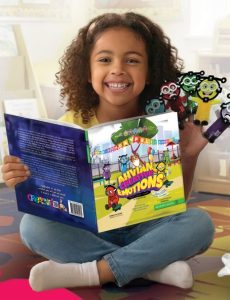
BILINGUAL READING

Emotions Books

Recognizing feelings through stories, vocabulary, questions, and creative activities.

ROLE PLAY

Emotions Finger Puppets

Practicing emotional language, supportive responses, and perspective-taking.
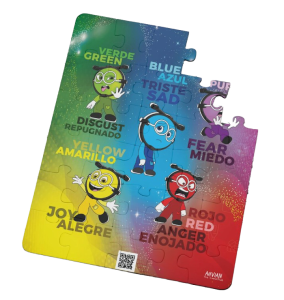
HANDS-ON LEARNING

Emotions Puzzle

Connecting facial cues, feeling words, and conversation through play.

LANGUAGE

Games & Cards


Exploring letter and emotions and bilingual vocabulary through interactive learning.
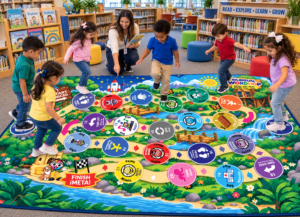
MOVEMENT

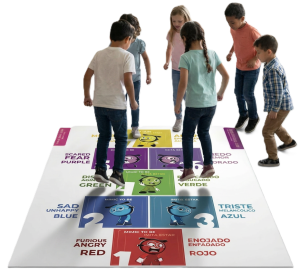
WordHop & Hopscotch Rugs

Bringing direction words, movement, and emotional expression into games.

RECONNECT

Sensory Pillows & Quiet Resources

Supporting calming routines, communication, and adult-guided reconnection.

09 / FOUR SEL PATHWAYS

PLAY. MOVE. EMBODY. RECONNECT.

Four complementary curricula with distinct materials, setups, and guided activities. They are not interchangeable.

MOVE

Bring learning to life through movement. Children jump, explore, and connect emotions with language and physical activity.
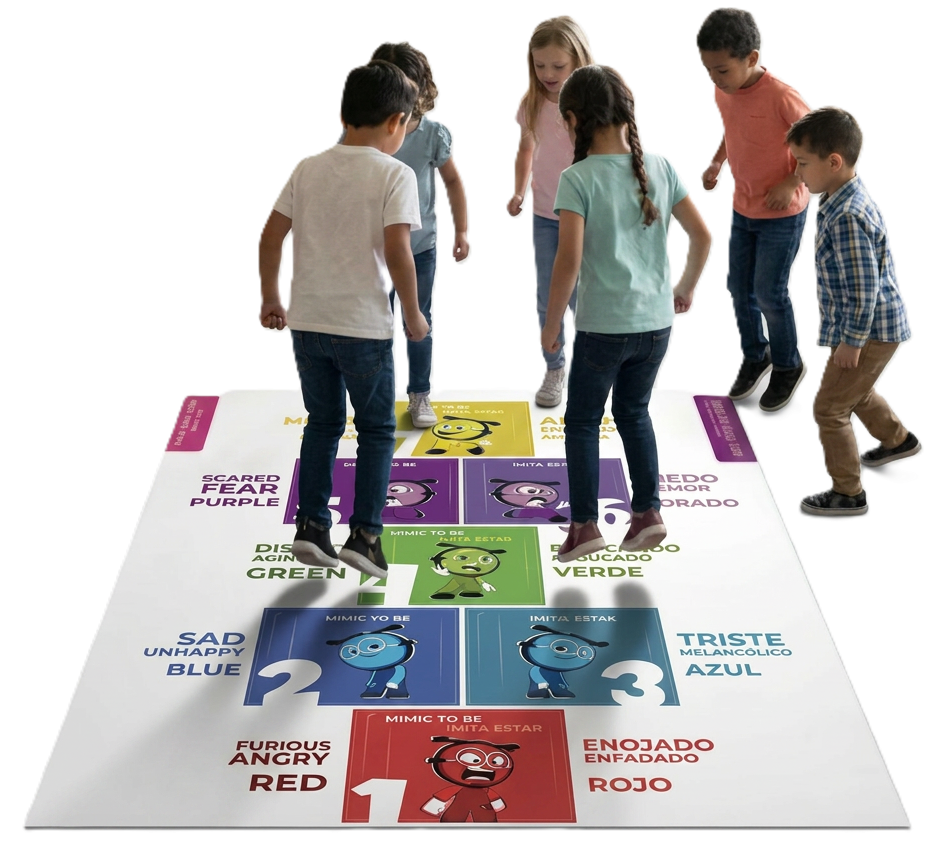
 

$ 89

EMBODIED

Step into emotions through movement and role-play. Children wear, act, and experience feelings—building empathy, confidence, and emotional understanding.
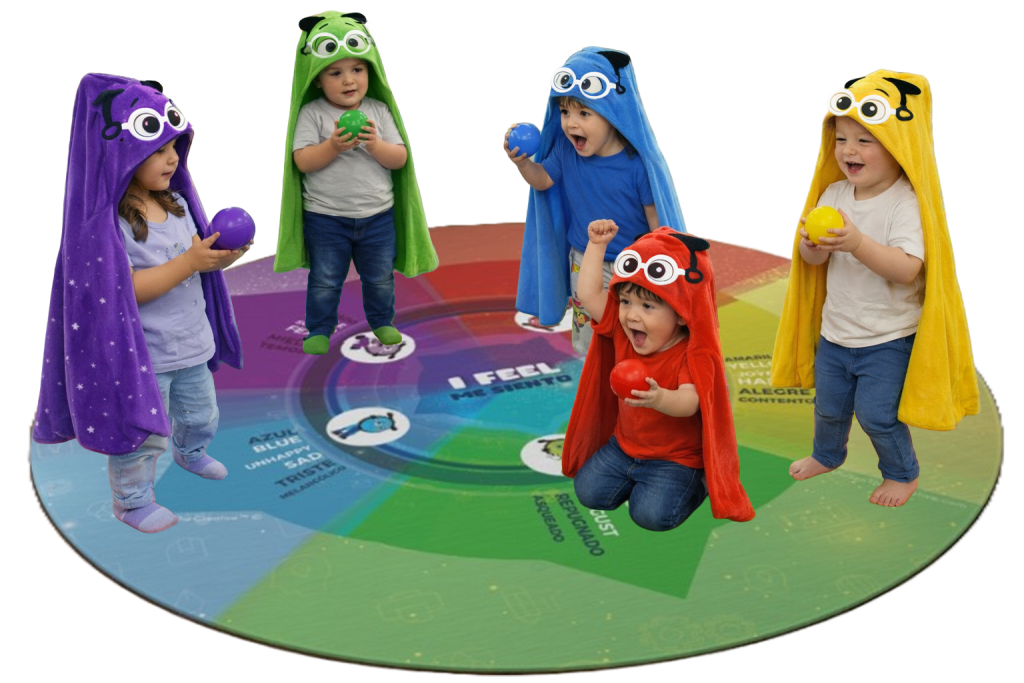
$ 249
Featured

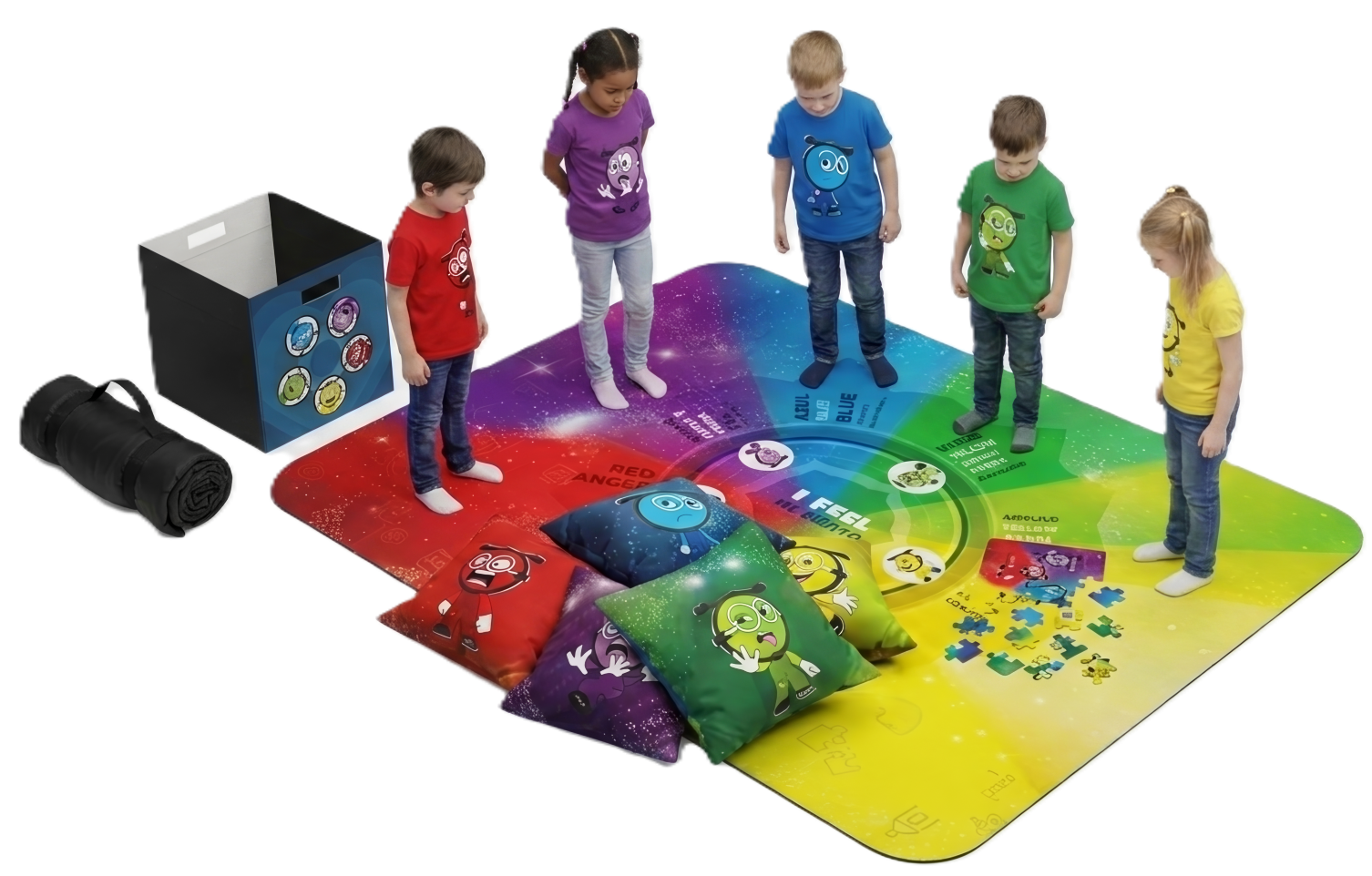
PLAY

Learn through play-based experiences that combine movement, language, and emotions. Engaging activities that build vocabulary, participation, and connection.
$ 230

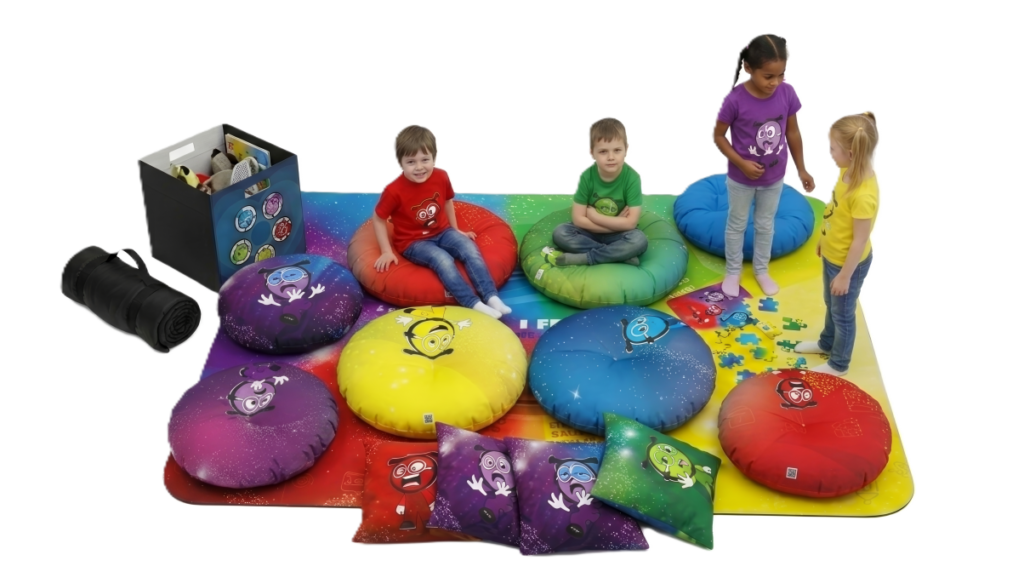
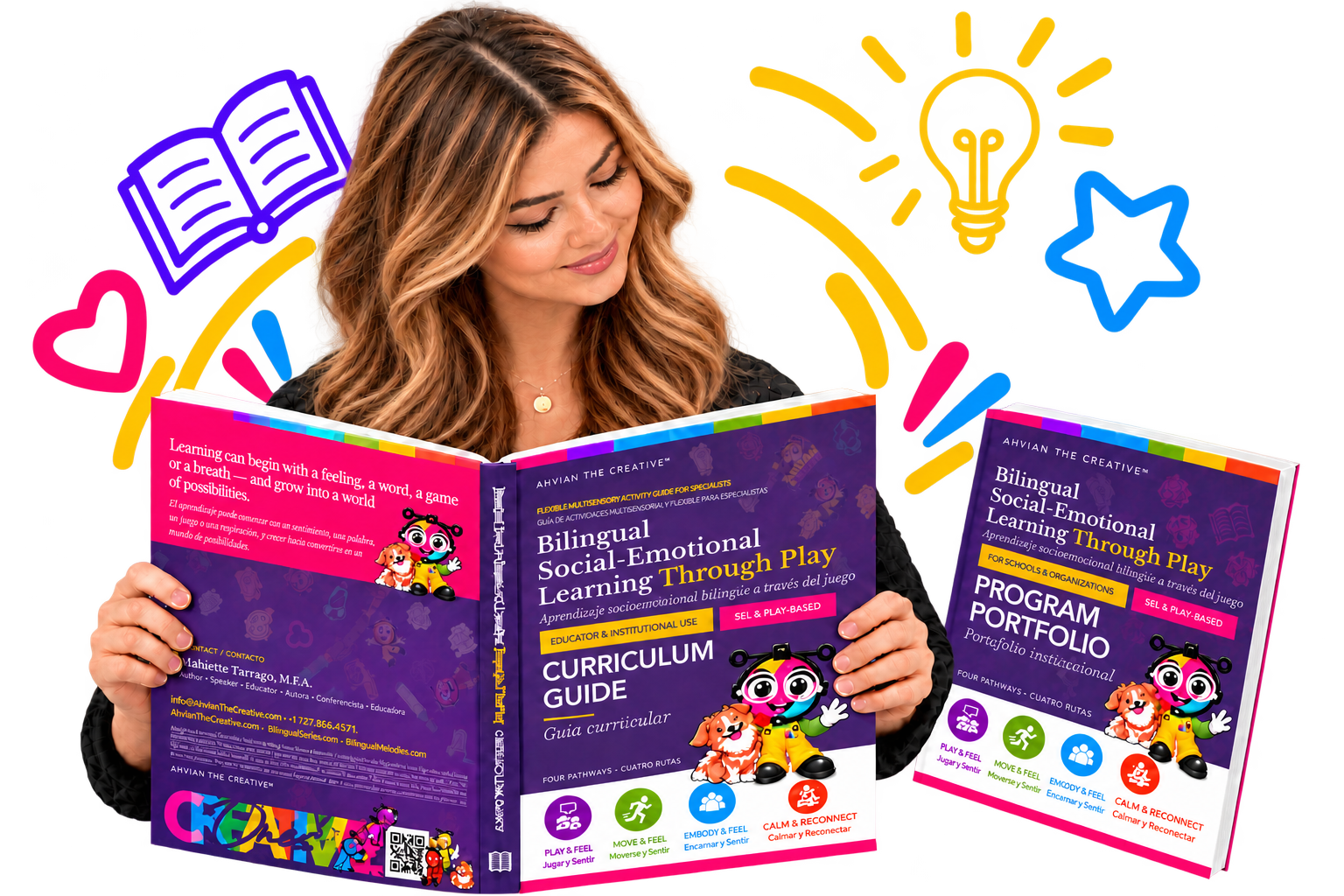
RECONNECT

Support emotional growth through reflection and regulation. Children identify feelings, develop self-awareness, and build confidence as they learn to reconnect.
$ 460
10 / EVERYDAY LEARNING

Not once. Every day.

Learning opportunities can be adapted to the places children live, learn, and receive support.

CLASSROOMS

Learn together

Read-alouds, emotion check-ins, movement, play, and guided peer conversations.

HOMES

Connect as a family

Bilingual storytelling, supportive responses, and everyday emotional vocabulary.

CLINICS

Support individual needs

Adapted learning resources used by qualified ABA, OT, SLP, counseling, and pediatric professionals.

A THOUGHT WORTH CARRYING FORWARD

A child should never have to hide a feeling to feel accepted.

We cannot remove every challenge children will face. But we can create more opportunities for them to understand their feelings, communicate their needs, notice others, and discover connection — through language, relationships, and play.

Explore the Social Emotional Learning Bilingual Curriculum & Program Guide

For Schools, Clinics, Learning Communities & Educational Partners

🏫 Schools, Districts & Classrooms
🌐 Dual-Language, Bilingual & ENL Programs
👐 Occupational Therapists & Physical Therapists
🗣️ Speech-Language Pathologists & Communication Specialists
🌟 Special Educators & Learning Support Professionals
🧩 ABA Centers, Behavior Analysts & Behavior Support Professionals
💜 Social Workers, Counselors & Psychologists
🩺 Pediatric Clinics & Developmental Support Centers
📚 Libraries & Family-Literacy Programs
🏛️ Museums, Cultural Institutions & Educational Associations
🏡 Homeschool Families & Learning Communities
🤝 Community Organizations & Educational Partners

Request Program Information

Download and explore four bilingual SEL pathways, hands-on activities, supporting resources, and flexible implementation options for educators, therapists, behavior specialists, schools, clinics, community organizations, and families.

REFERENCE LIBRARY

Research & further reading

Alice Miller: The Drama of the Gifted Child (original German edition, 1979) and For Your Own Good (1980).

Harvard Center on the Developing Child: Serve and Return — responsive interactions and early development.

CASEL: SEL competencies, CASEL Fundamentals and SEL in the classroom.

Research distinction: Miller’s interpretations, modern developmental findings, and the intended educational purposes of Ahvian products are separate categories of evidence. None of these cited sources constitute an independent evaluation of the Ahvian curricula.

Subscription Form